

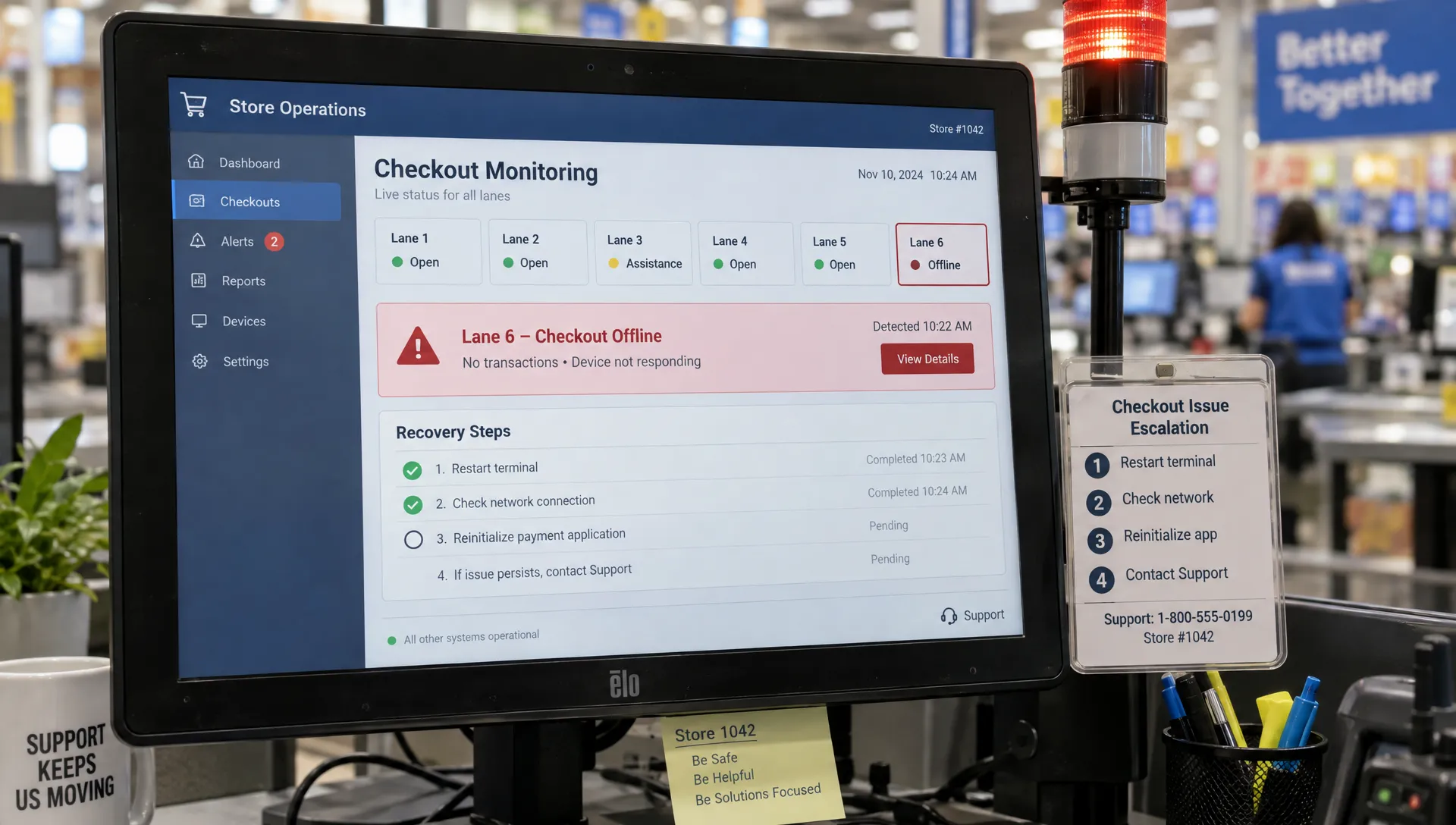
An ecommerce agency retainer should buy reliable operations, clearly allocated capacity and a measurable improvement process, not just access to a ticket queue. For a retail brand, the agreement needs to explain how the store stays stable, how commercial priorities become shipped changes and how both sides judge progress. It should also make the less glamorous details explicit: support hours, approval limits, ownership and what happens when the relationship ends.
The most useful proposal is one your team can turn into a working operating plan.
Define the retainer’s job before negotiating the fee
Start by separating ongoing responsibilities from finite projects. Maintaining integrations, investigating checkout issues and improving product discovery are recurring needs. A full replatform, a new international storefront or a major ERP integration may require a separately scoped project.
A retainer can accommodate both maintenance and development, but only if the agreement explains how they share capacity. Otherwise, urgent fixes can consume the month while the growth roadmap quietly stalls.
Write down the business priorities the arrangement supports. These might include reducing checkout friction, protecting peak trading periods or lowering the cost of maintaining the stack. Then identify what the agency controls and what depends on your merchandising, operations or marketing teams.
The contract should distinguish commitments from ambitions. A release deadline or reporting cadence can be a commitment. Revenue growth is an objective influenced by inventory, pricing, traffic quality and other factors outside the agency’s control.
What should an ecommerce agency retainer include?
The baseline is a defined combination of operational support, planned improvements and measurement. The balance will differ by store complexity, but each workstream needs an owner, an agreed scope and evidence of completion.
Store reliability and accountable support
Specify which parts of the commerce environment the agency maintains: storefront code, integrations, deployment pipelines, monitoring or particular applications. Managed platforms and third-party vendors retain their own responsibilities, so “full support” is too vague.
The service agreement should distinguish an acknowledgment deadline from a restoration target. Replying to a checkout outage is not the same as restoring checkout. Define severity levels, support hours, escalation contacts and whether after-hours coverage is included or separately purchased.
Also establish who can authorize emergency work and spending. A documented rollback or recovery approach, where the platform supports it, is more useful than a general promise to fix problems quickly.
For maintenance, identify the relevant updates, compatibility checks and integration reviews. Clarify how defects introduced by agency work are corrected, including whether that correction consumes your paid improvement capacity.
A protected improvement backlog
Support alone does not create a growth program. Reserve identifiable capacity for improvements and explain what happens to that allocation when incidents interrupt planned work.
An ecommerce agency should maintain a prioritized backlog that connects each proposed change to a customer problem, a commercial objective and a way to evaluate it. “Redesign the product page” is less useful than “make delivery costs visible before shoppers enter checkout.”
Each selected item needs acceptance criteria, an estimate and dependencies. Your team should know whether product data, creative assets or approvals are required before work can begin.
Discovery and experimentation also need boundaries. A small investigation can fit within the retainer, while a larger initiative may need its own statement of work. Agree on that threshold before the backlog fills with loosely defined projects.
Performance, UX and technical health
The agreement should cover how technical and customer-experience problems are found, prioritized and verified after release. That includes representative mobile journeys, accessibility checks and the integrations that affect buying confidence.
For performance, use a baseline rather than an unqualified promise of a “fast site.” Google’s Core Web Vitals guidance defines good thresholds as LCP of 2.5 seconds or less, INP of 200 milliseconds or less and CLS of 0.1 or less, assessed at the 75th percentile. Lab diagnostics and real-user data serve different purposes and should be labeled accordingly.
An ecommerce agency retainer should identify the pages and journeys being measured, how regressions are detected and who investigates them. A homepage score alone cannot represent a complex storefront.
Technical SEO responsibilities need similar precision. Use the scope of comprehensive ecommerce SEO services to distinguish development support, such as redirects and crawlability fixes, from an ongoing content or organic-growth program.
Make capacity and pricing explicit
A monthly fee is not a useful comparison unless you know what it buys. Common structures include reserved hours, a defined delivery team or recurring deliverables. Some agreements combine these approaches.
Ask how capacity is counted. Account management, meetings, investigation, QA and deployment may all consume time. None is inherently unreasonable, but the proposal should disclose the accounting method and distinguish work delivered from capacity reserved.
Your ecommerce agency agreement should answer five practical questions:
- What capacity or deliverables are included each month?
- How much is allocated to support versus planned improvements?
- Does unused capacity expire, roll over or receive another treatment?
- Who approves overages, at what rate and within what spending limit?
- Which platform charges, software licenses and specialist services are excluded?
For uncertain tasks, use a capped investigation followed by an estimate and approval. That is safer than allowing open-ended troubleshooting to consume the budget without a decision point.
Also clarify how AI-assisted delivery affects estimating and billing. Faster implementation can be valuable, but generated code still requires review, testing and accountable ownership. Compare the quality and scope of accepted work, not unsupported claims about hours saved.
If pricing depends partly on outcomes, define attribution rules and exclusions carefully. Promotions, stock shortages and changes in acquisition spending can move sales independently of agency work.
Require reporting tied to commercial decisions
Reporting should explain what changed, what the evidence indicates and what decision follows. A list of completed tickets provides delivery visibility, but it does not establish commercial value.
Conversion goals depend on the business model. A retail storefront may prioritize completed purchases, while an appointment-led business such as Teeth On Ferry’s cosmetic dental practice directs visitors toward consultation bookings. The useful principle is to define the intended customer action before selecting the dashboard.
For a retail retainer, connect reporting across three levels: operational health, customer behavior and commercial performance. These might include checkout errors, progression through the purchase funnel and revenue or margin measures where reliable data is available.
An ecommerce agency should document metric definitions, data sources and known tracking limitations. Specify whether conversion rate uses sessions or users, how refunds are handled and whether comparisons account for promotions or device mix.
The report should also separate observation from causation. A higher conversion rate after a release is encouraging, but it does not prove the release caused the improvement. Where traffic supports experimentation, agree on the hypothesis and evaluation method before launch. For lower-volume stores, combine behavioral evidence, usability findings and operational measures without overstating certainty.
Each monthly review should end with decisions: continue, revise, investigate or stop. Those decisions should feed the next delivery cycle.

Agree on governance, ownership and safe AI use
A decision and release cadence
Name the accountable lead on each side and identify the people responsible for engineering, UX and measurement. Your team should know who resolves conflicting priorities and who can approve changes to budget or scope.
A practical cadence includes regular backlog review, delivery updates and a monthly commercial discussion. The frequency can vary, but decisions and dependencies should remain visible between meetings.
The ecommerce agency should provide a release record covering shipped changes, validation completed and unresolved risks. For higher-risk work, agree on staging review, approval requirements and the recovery plan before deployment.
Define acceptance as well. Who checks a change, against which criteria and within what period? Without an agreed process, work can sit awaiting approval while both teams disagree about whether it is complete.
If you are comparing proposals, treat missing accountability as a contract issue rather than a presentation issue. Several common agency red flags for retail brands become easier to assess once responsibilities are written down.
Access, intellectual property and AI controls
Your business should retain control of its platform accounts, domains, repositories and analytics properties. Give the agency appropriate access rather than making its accounts the only route into critical systems.
The agreement should define ownership or licensing of custom code, designs and documentation, including any pre-existing agency tools or third-party components. Do not assume that payment automatically settles every intellectual property question.
Security responsibilities should cover access permissions, credential handling, offboarding and incident notification. If the agency handles customer data, establish the permitted processing and any applicable contractual requirements.
For AI-assisted work, specify what data may enter external tools, who reviews outputs and whether new dependencies require approval. Customer records, credentials and confidential business information should not be submitted to unapproved tools. Any live AI retail feature also needs defined data sources, monitoring and a fallback when it cannot complete the intended task.
Review renewal and exit terms before signing
A useful ecommerce agency retainer makes leaving operationally manageable. Check the initial commitment, renewal mechanism, notice period and any termination charges before focusing on the monthly price.
Define the handover deliverables: current documentation, repository access, deployment instructions, open issues and a summary of unfinished work. Identify who transfers vendor relationships and removes agency access. Specify whether transition assistance is included or charged separately.
The agreement should also explain what happens to prepaid fees, unused capacity and work awaiting acceptance. These details matter most during a disagreement, when an informal understanding is least dependable.
Set a review point that evaluates the arrangement itself, not just individual tasks. Are priorities clearer? Is the store more stable? Is planned work getting shipped? Does reporting support better decisions?
If recurring incidents consume every month, the right response may be a separate stabilization project or a revised support allocation. Continuing the same retainer without changing the underlying constraints is not a growth plan.
Use a contract checklist to compare proposals
Compare proposals against the same operating requirements rather than relying on service names or total hours. A lower fee may exclude essential support; a larger allocation may include work your team does not need.
Ask each ecommerce agency to show where these points appear in its proposal or agreement:
| Area | What should be explicit |
|---|---|
| Scope | Supported systems, recurring responsibilities and exclusions |
| Capacity | Monthly allocation, accounting rules and treatment of unused capacity |
| Support | Severity definitions, coverage hours and escalation process |
| Delivery | Prioritization, estimates, acceptance criteria and release validation |
| Measurement | Baselines, metric definitions, reporting cadence and tracking limitations |
| Costs | Overage approval, pass-through expenses and separately scoped work |
| Ownership | Account control, IP terms, documentation and access requirements |
| Exit | Notice, renewal, handover obligations and transition costs |
Use the first delivery cycle to validate the assumptions. The initial backlog, support demand and data quality may reveal that the proposed allocation needs adjustment. Define how those changes will be agreed rather than treating the original plan as permanently fixed.
Frequently asked questions
How many hours should a retainer include? There is no universal allocation. Estimate recurring support, planned improvements, QA and coordination separately. Review actual demand after the initial delivery cycles, including whether incident work is displacing agreed priorities.
Should paid media and SEO be included? Only when they are explicitly scoped. An ecommerce agency development retainer does not automatically include campaign management, content production or a complete SEO program. Define shared dependencies when different partners own those activities.
Should a retainer guarantee revenue growth? It should establish commercial objectives and measurable delivery commitments, not promise revenue regardless of trading conditions. Inventory, pricing, promotions and acquisition quality can materially affect results. Any performance-based fee needs clear measurement and attribution terms.
When is a project better than a retainer? A project is often better for a finite initiative with defined requirements and an acceptance point. A retainer suits recurring support and an evolving improvement backlog. A major build can be separately scoped while ongoing maintenance continues under the retainer.
Build the agreement around your retail priorities
Before requesting a proposal, document your current operational risks, the improvements you want to make and the decisions your reporting needs to support. Use those inputs to negotiate responsibilities and capacity.
Space Dinosaurs combines retail-focused engineering, human-centered UX, performance optimization and analytics. Discuss your store’s priorities to establish which ongoing work belongs in a retainer and which initiatives need a separate scope.