

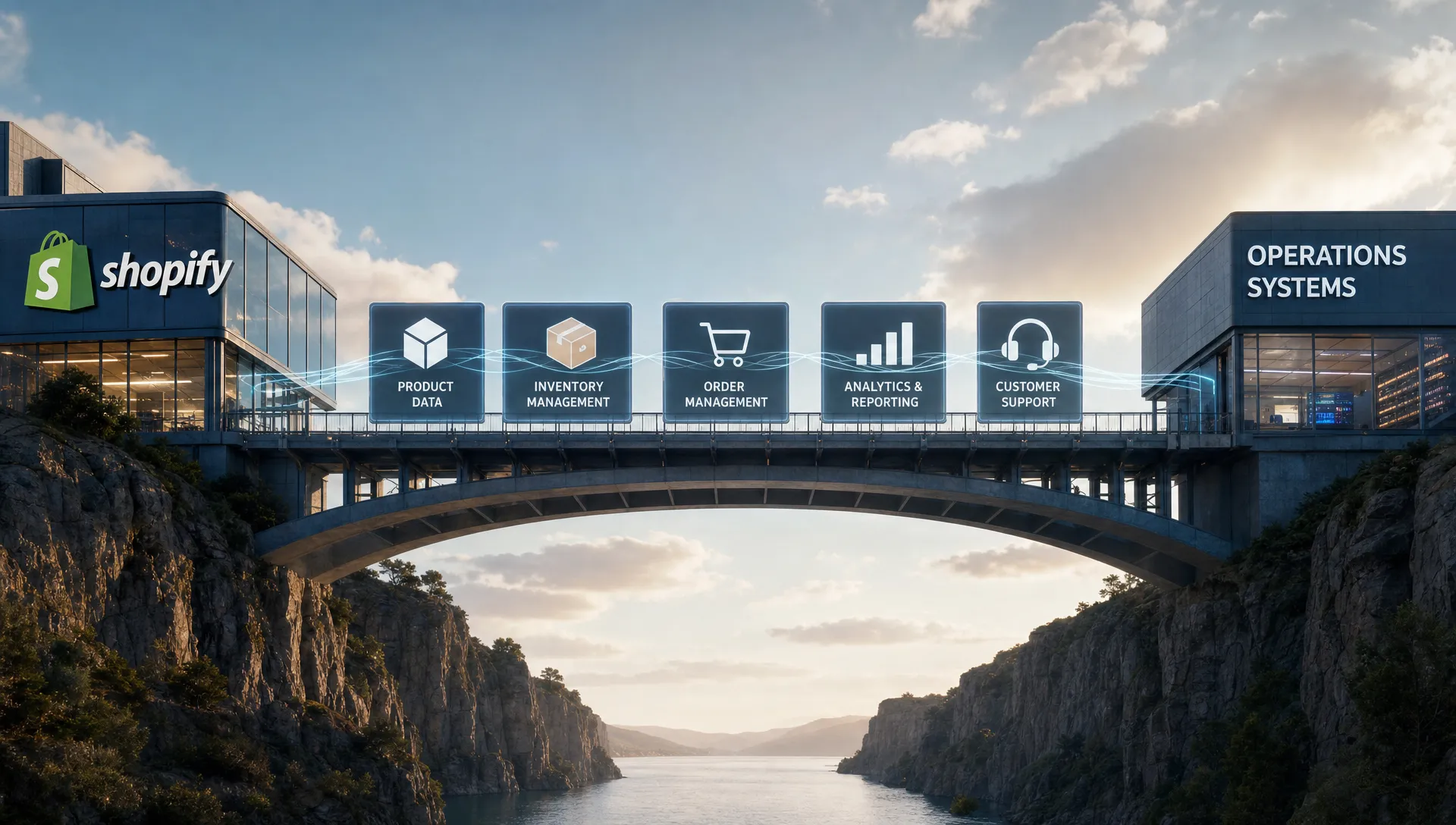
Most retailers do not need a prettier Shopify store. They need a commercial system that loads quickly, merchandises well, connects cleanly to operations and keeps improving after launch. That is the real job of a Shopify website development company.
A strong build is not limited to theme setup or checkout configuration. It should give your team better control over the customer journey, cleaner data for decisions and fewer technical surprises during peak trading periods. For growing retail brands, the question is not only “Can this agency build Shopify?” It is “What will they build that makes the business easier to run and more profitable to scale?”
Begin with what the business needs to sell
The first thing a development partner should build is alignment. Before design systems, templates or custom code, the team needs a clear view of your retail model.
That means understanding your catalog structure, margin pressure, inventory rules, fulfillment model, merchandising calendar, loyalty strategy and paid media dependency. A store selling seasonal apparel needs different flexibility than a multi-brand home goods retailer with thousands of SKUs, complex variants and frequent promotions.
A serious Shopify partner should turn that discovery into a build brief that connects business goals to technical decisions. For example, if your team plans weekly landing pages, the build should prioritize reusable content sections and easy merchandising controls. If your catalog relies on fit, compatibility or style matching, the build should support richer product data and guided discovery. If your paid traffic costs are rising, performance and conversion friction become core requirements, not polish.
This is also where a good partner challenges unnecessary complexity. Custom development can be valuable, but Shopify-native capabilities, thoughtful theme architecture and disciplined app selection often produce a more stable result than reinventing common commerce functions.
Build an architecture merchandising teams can control
A Shopify store should not depend on developers for every homepage update, collection refresh or campaign page. A development company should create an architecture that lets marketers and merchandisers move quickly without breaking the site.
That usually includes a modular theme, reusable sections, well-structured templates and a clear content model. Shopify metafields and metaobjects can be powerful when they are planned around real merchandising needs rather than added as one-off fixes. Product badges, care instructions, delivery messaging, fit notes, comparison tables, editorial blocks and collection-level content should all have a logical place to live.
Architecture also includes restraint. Every app, script and customization adds operational weight. A development partner should document what is custom, what is Shopify-native and what depends on third-party tools. If your brand expects to scale into new markets, new brands or new selling models, Space Dinosaurs has a useful companion guide on choosing a Shopify agency that can actually scale.
| Build area | What it should include | Why it matters |
|---|---|---|
| Theme structure | Reusable sections, flexible templates and documented components | Faster campaign updates with less developer dependency |
| Product data model | Metafields, metaobjects and consistent taxonomy | Better filtering, merchandising and future personalization |
| App governance | Clear criteria for apps, scripts and custom alternatives | Lower performance risk and simpler maintenance |
| Content operations | Editable landing pages, promo modules and campaign blocks | More agility for trading and marketing teams |
| Technical documentation | Decisions, dependencies and release notes | Easier onboarding and safer future changes |
Build shopping journeys that remove hesitation
A Shopify website is only successful if shoppers can make decisions confidently. The build should support the full path from discovery to checkout, especially on mobile where most friction becomes more expensive.
That starts with navigation and product discovery. Collection pages need useful filters, sort options and product cards that show enough information for shoppers to compare items quickly. Search should handle common language, misspellings and high-intent product terms where possible. Promotional messaging should be visible without crowding the page.
Product detail pages deserve particular attention. A development company should build templates that make product information easy to scan, including imagery, variants, pricing, shipping expectations, returns information, reviews, product specifications and cross-sells when relevant. For retailers with complex products, the PDP may need size guidance, compatibility tools or comparison content.
Cart and checkout experiences should reduce doubt rather than add distractions. Shopify limits some checkout customization depending on plan and configuration, but there is still plenty to optimize around cart clarity, shipping messaging, upsells, payment options and trust cues.
The design layer matters because conversion problems often come from unclear choices, not broken code. For a deeper look at that side of the work, read Space Dinosaurs’ perspective on how a Shopify website design company shapes conversion.
Build performance into the storefront from day one
Performance should not be treated as a post-launch cleanup project. A Shopify development company should build with speed constraints from the start, especially for retailers that rely on paid acquisition, SEO and mobile traffic.
The work begins with a performance budget. The team should make decisions about imagery, fonts, JavaScript, apps and tracking tags with that budget in mind. Large hero videos, multiple personalization tools, heavy review widgets and uncontrolled marketing scripts can all slow the experience if no one owns the tradeoff.
Core Web Vitals improvements often come from dozens of small choices: optimized images, restrained app usage, careful lazy loading, lean theme code, clean CSS and predictable script loading. A good partner will test across real devices and network conditions, not only ideal desktop environments.
Performance is also an operating habit. After launch, the team should monitor the effect of new apps, campaign scripts, A/B tests and content changes. A store can be fast on launch day and slow three months later if governance disappears.
Build integrations that make operations calmer
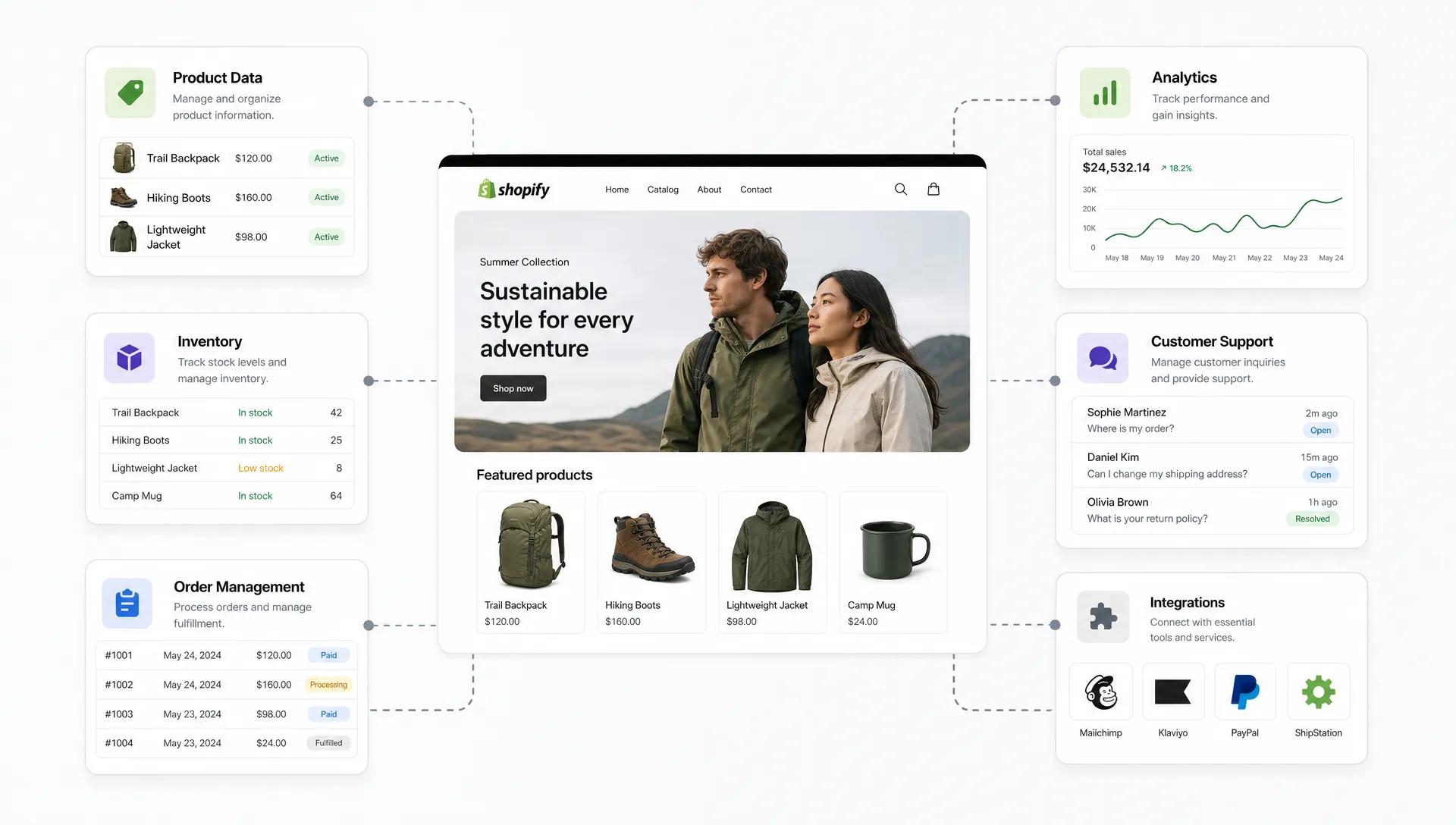
The storefront is only one part of the retail system. A development company should build integrations that keep orders, inventory, customer data and product information flowing accurately.
Depending on the retailer, that may involve an ERP, OMS, WMS, PIM, 3PL, tax platform, returns platform, loyalty system, CRM, subscription tool or marketplace connector. The goal is not to connect everything for its own sake. The goal is to reduce manual work, protect the customer promise and give teams confidence in the data they use every day.
Strong integration work includes clear field mapping, error handling, retry logic, ownership rules and documentation. If inventory is delayed, what happens on the storefront? If an order fails to sync, who is alerted? If product data is incomplete, does the site hide the product, show a fallback or block publication?
These questions are not edge cases for a growing retailer. They are normal operating conditions. A build that ignores them may look fine in a demo but create daily friction for customer service, merchandising and operations.
Build a trustworthy data layer
A modern Shopify build should include more than analytics tags. It should include a data layer that helps the business understand what shoppers do, where they hesitate and which changes improve performance.
The development company should define key events, naming conventions and tracking requirements before launch. Product views, collection interactions, search behavior, add-to-cart events, checkout steps, purchases, promo engagement and form submissions should be implemented consistently. Consent management and privacy requirements should also be part of the plan.
This work matters because poor analytics creates bad decisions. If product impressions are inconsistent, merchandising teams cannot trust collection performance. If checkout events are misconfigured, the team may chase the wrong conversion problem. If paid media tracking breaks, acquisition costs become harder to manage.
A reliable data layer also supports experimentation. Once events and KPIs are stable, teams can prioritize conversion work with more confidence. Space Dinosaurs covers that growth layer in more detail in its guide to Shopify conversion rate optimization.
| Data asset | What the build should define | Business value |
|---|---|---|
| Event taxonomy | Standard event names and required parameters | Cleaner reporting across tools |
| Ecommerce tracking | Product, cart, checkout and purchase events | Better funnel visibility |
| Merchandising signals | Search, filter, sort and collection engagement | Stronger product discovery decisions |
| Consent handling | Rules for when tracking can run | Better privacy compliance and data quality |
| KPI framework | Primary metrics for launch and optimization | Clearer prioritization after go-live |
Build reliability and release discipline
Retail sites fail in practical ways: a promotion code does not apply, a product feed stops updating, a third-party script blocks checkout or an SSL issue interrupts access. A Shopify development company should build release discipline around those risks.
That means staging environments, QA plans, regression testing, accessibility checks, device testing and documented deployment steps. It also means defining what happens after a release. Who watches conversion, error logs, page speed and order flow? Who owns rollback decisions? Who signs off during high-volume periods?
Independent uptime and network monitoring tools like MyMonitor365 can add another layer of visibility for HTTP(S), SSL, DNS and network issues, especially when retail teams need alerts before customers start reporting problems.
Reliability is not just technical. It builds trust between teams. Marketing can launch campaigns with fewer surprises, customer service can answer questions with better information and leadership can make growth plans without worrying that every change will destabilize the store.
Build AI-ready foundations, not disconnected AI features
Retail leaders are right to ask how AI fits into a Shopify build, but AI should not be bolted on as a novelty. The development company should first build the foundations that make AI useful: clean product data, consistent taxonomy, reliable behavioral signals, clear content structures and sensible guardrails.
From there, AI-driven retail experiences can become practical. Conversational commerce may help shoppers find products faster when it is grounded in accurate catalog data. AI-assisted merchandising can support teams when the underlying product attributes are consistent. Personalized recommendations become more useful when the site captures meaningful intent signals.
The build should also account for human review. Retail brands have tone, compliance needs, promotional rules and category knowledge that should shape any AI-assisted experience. The best use of AI in commerce usually feels less like a flashy feature and more like a smoother decision path for the shopper.
Build a post-launch operating model
A Shopify launch is not the finish line. It is the point where real customer behavior begins to challenge assumptions.
A development company should leave behind an operating model for continuous improvement. That includes a roadmap, backlog process, reporting cadence, performance monitoring, app governance, documentation updates and a plan for seasonal trading periods. The first 30 to 90 days after launch are especially valuable because teams can compare expected behavior with actual customer data.
This is where the difference between a vendor and a retail partner becomes clear. A vendor delivers tickets. A strong partner helps decide which tickets matter, which changes are worth testing and which technical investments will reduce future cost.
What the build brief should include
If you are preparing to hire a Shopify website development company, your brief should ask for more than pages and features. It should define the business outcomes the build needs to support.
| Brief section | Questions to answer before development starts |
|---|---|
| Commercial goals | Which metrics should improve after launch? |
| Customer journeys | Which paths matter most for discovery, purchase and retention? |
| Merchandising needs | How often will teams update campaigns, collections and content? |
| Technical architecture | What should be Shopify-native, custom or handled by apps? |
| Integrations | Which systems must exchange data and what happens when syncs fail? |
| Performance | What speed standards will guide design and development choices? |
| Analytics | Which events, KPIs and reports must be reliable on day one? |
| Post-launch support | How will optimization, QA and releases be managed after launch? |
A build brief like this keeps the conversation focused on outcomes. It also makes proposals easier to compare because each company must explain how its approach supports the same retail requirements.
Frequently Asked Questions
What should a Shopify website development company deliver? It should deliver a stable storefront architecture, conversion-focused shopping journeys, performance optimization, clean integrations, reliable analytics, QA processes and a post-launch improvement plan. The best partners build a retail operating system, not just a theme.
Is custom Shopify development always better than using apps? No. Custom development is useful when it solves a specific business need that apps or native Shopify features cannot handle well. Many brands are better served by a leaner stack with carefully selected apps, strong governance and custom code only where it creates clear value.
How early should performance be considered in a Shopify build? Performance should be considered during strategy and design, before development begins. Decisions about imagery, fonts, tracking scripts, apps and page structure all affect speed, so treating performance as a launch-week task usually creates avoidable rework.
What makes a Shopify build AI-ready? An AI-ready build has clean product data, consistent taxonomy, reliable customer behavior signals, structured content and clear rules for how AI-assisted experiences should behave. Without those foundations, AI features often create more complexity than value.
Build for the way retail actually grows
The right Shopify build should help your team trade faster, learn faster and operate with fewer avoidable problems. That requires more than development capacity. It requires retail strategy, disciplined engineering, human-centered UX, analytics and ongoing optimization working together.
If your brand is planning a Shopify build, migration or modernization, Space Dinosaurs helps retail teams create faster, more stable and more cost-effective commerce experiences built for long-term growth.