

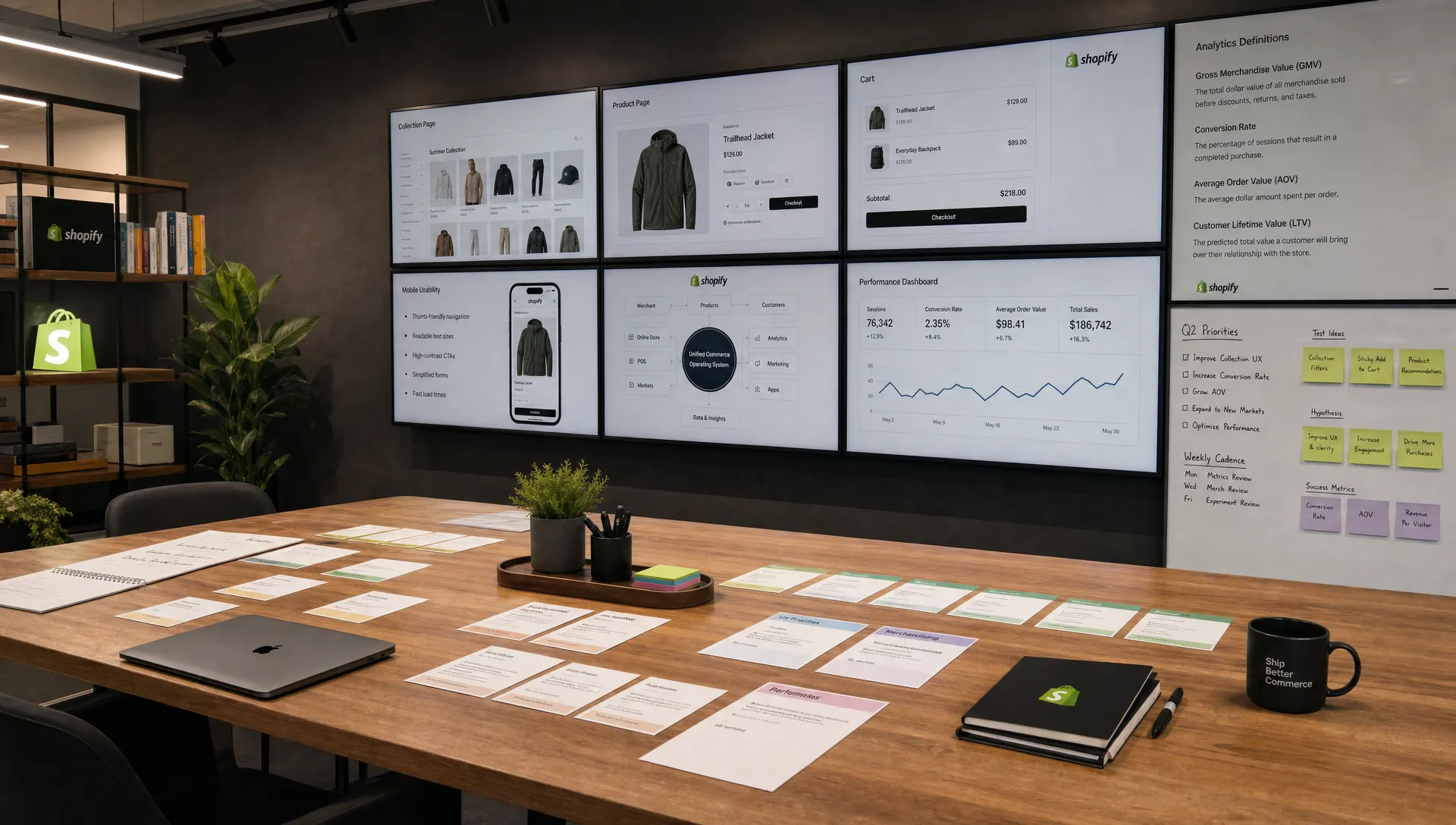
A Shopify storefront can look polished and still quietly leak revenue. The difference between a good-looking theme and a high-converting commerce experience is not decoration. It is how quickly shoppers understand the offer, find the right product, trust the purchase and complete checkout without friction.
That is where a Shopify website design company can shape conversion long before a CRO test goes live. Design decisions affect product discovery, page speed, trust, merchandising flexibility, mobile usability and analytics quality. For retail brands, those decisions compound across every session.
Conversion is a design outcome, not a launch-day metric
Many teams treat conversion rate optimization as something that happens after a redesign. They launch the store, watch the numbers and then start testing button colors or promotional banners. That sequence often misses the bigger issue: conversion is built into the structure of the storefront.
If the product listing page buries key filters, shoppers leave before seeing the right item. If the product detail page does not answer objections, add-to-cart rate drops. If images, apps and scripts slow mobile pages, paid traffic becomes more expensive to convert. If event tracking is incomplete, the team cannot see where shoppers are falling out of the journey.
A strong Shopify website design company treats the storefront as a buying system. Visual design still matters, but it is tied to commercial behavior. Every template has a job, every component should reduce uncertainty and every major design choice should be measurable.
How a Shopify website design company changes shopper behavior
Shopify provides a strong commerce foundation, but conversion depends on how that foundation is designed, configured and maintained. The most valuable agency work happens where UX, engineering, merchandising and analytics overlap.
It makes the buying path obvious
Shoppers should not have to interpret the site. A well-designed Shopify storefront helps them answer a few questions quickly: where am I, what can I buy, why should I trust this brand and what should I do next?
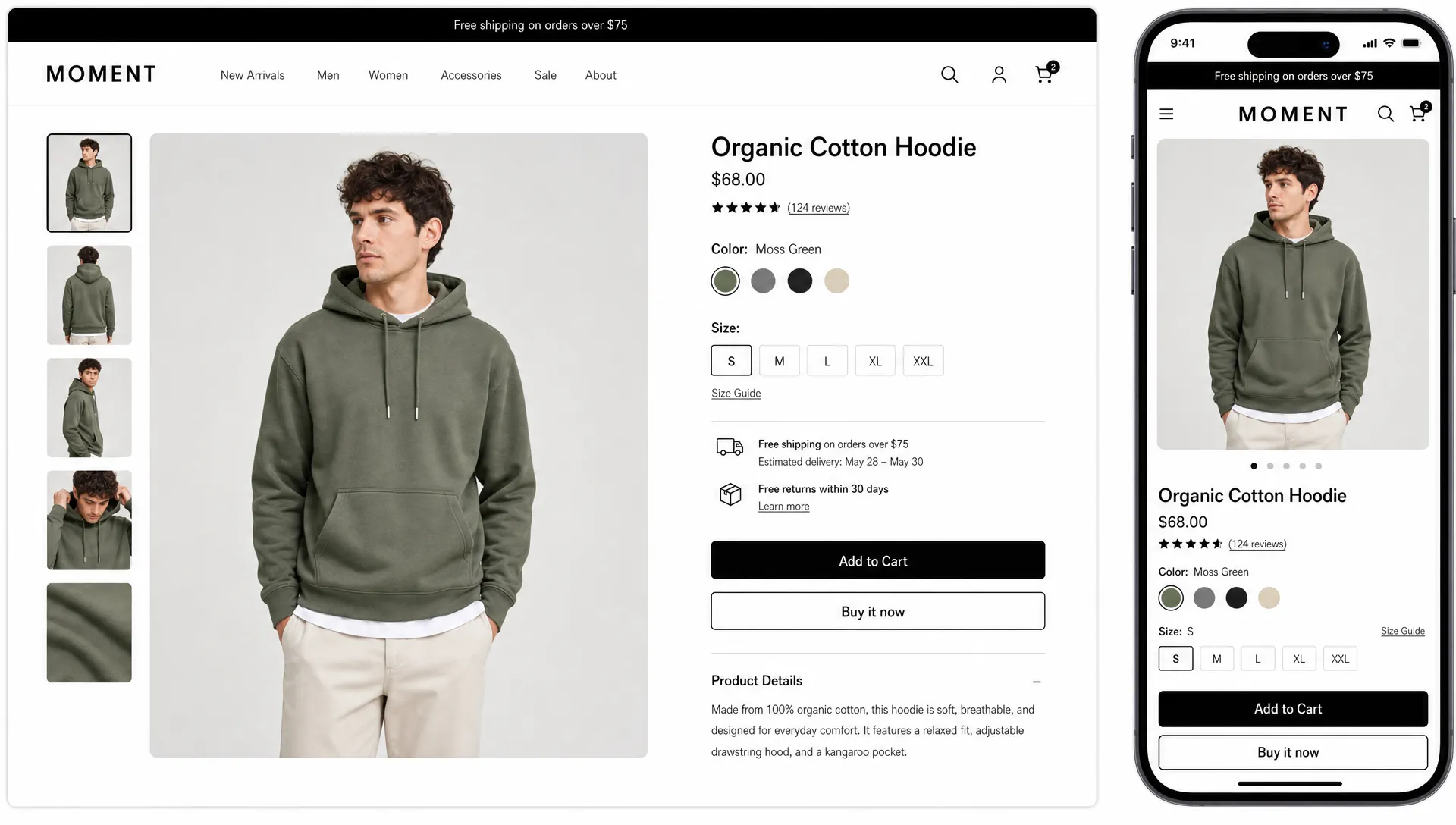
That starts with information hierarchy. The homepage should guide different intent levels without becoming a crowded campaign board. Collection pages should make product comparison easy. Product pages should surface the facts that affect purchase confidence, including price, variants, delivery expectations, returns and product proof.
On Shopify, this also means designing reusable sections and templates that merchandising teams can update without breaking consistency. When the design system is too rigid, teams struggle to launch campaigns. When it is too loose, the shopping experience becomes inconsistent. Conversion improves when creative flexibility and UX discipline work together.
It designs for mobile behavior first
Retail teams often approve designs on large desktop monitors, but many shoppers are evaluating products on mobile devices with less time, less patience and more distractions. A Shopify website design company should design for thumb-friendly navigation, clear tap targets, compact content and fast decision-making.
Mobile conversion depends on details that are easy to overlook in static mockups. Sticky add-to-cart bars can help when they do not cover key content. Accordions can reduce page length when labels are clear. Variant selectors should be easy to tap and should show availability without forcing trial and error. Product images need enough detail to support confidence without bloating load time.
The goal is not to shrink the desktop experience. It is to create a mobile buying flow that feels native to how shoppers browse, compare and purchase.
It reduces product risk on the PDP
The product detail page is where interest becomes intent. Good PDP design does more than display product data. It reduces risk.
For lower-consideration products, that might mean clear variant options, social proof, fast shipping messaging and helpful product photography. For high-consideration categories, trust becomes even more central. A shopper comparing certified pre-owned luxury timepieces expects authentication details, warranty information, shipping clarity and concierge-level reassurance before making a purchase decision.
The same principle applies across retail categories. Skincare shoppers need ingredient confidence. Apparel shoppers need fit and returns clarity. Furniture shoppers need dimensions, delivery timing and room context. A Shopify website design company shapes conversion by identifying the anxieties specific to the category and designing the PDP to answer them before shoppers abandon the page.
It makes performance part of the design process
Performance is not just an engineering cleanup task. Design choices create performance outcomes. Oversized imagery, unnecessary animations, heavy third-party apps and poorly planned scripts can slow the exact templates that drive revenue.
A conversion-focused Shopify team should think about speed while designing the experience. That includes image strategy, font loading, app governance, Liquid structure, JavaScript discipline and Core Web Vitals on revenue-critical templates such as collection pages, product pages, cart and checkout-adjacent flows.
If your team is already dealing with slow pages, our guide to website speed optimization fixes explains practical ways ecommerce brands can improve performance without treating speed as a one-time audit.
It connects merchandising to shopper intent
A Shopify storefront needs to help different shoppers move at different speeds. Some know exactly what they want. Others need filtering, comparison, education or product recommendations.
Collection page design is central here. The right filters, sort logic, product card information and promotional modules can help shoppers narrow choices without feeling trapped in a maze. Search also matters. If internal search results are weak, customers with high intent can become some of the easiest revenue to lose.
AI can support this work through better product recommendations, assisted search, conversational commerce and personalization, but it needs a sensible data and UX strategy. The value is not adding AI for novelty. It is using technology to reduce friction and make the next best action easier for the shopper.
It protects checkout from avoidable friction
Shopify checkout is already optimized in many ways, but the path into checkout still matters. Cart design, shipping clarity, discount code behavior, payment messaging and error handling can all influence completion.
Baymard Institute's long-running checkout research has placed average online cart abandonment near 70 percent, which is a reminder that purchase intent is fragile. Many abandonment issues start before checkout, when costs are unclear, returns feel risky or the cart experience creates doubt.
A good design partner improves the pre-checkout experience so the shopper arrives ready to complete the order, not ready to reconsider it.
The template-level conversion map
A Shopify redesign should not focus only on the homepage. Most conversion impact comes from the templates that shoppers use to discover, evaluate and buy products.
| Shopify area | Conversion job | Design decisions that matter |
|---|---|---|
| Homepage | Route shoppers to the right journey | Clear positioning, featured categories, campaign hierarchy and strong navigation |
| Collection pages | Help shoppers narrow choices | Filters, sorting, product cards, badges, quick views and merchandising modules |
| Product pages | Build purchase confidence | Media, variants, size or spec guidance, reviews, shipping, returns and trust messaging |
| Cart | Confirm value and reduce hesitation | Item clarity, promotions, delivery expectations, payment reassurance and easy editing |
| Search | Capture high-intent demand | Autocomplete, synonym handling, result relevance, no-results recovery and product ranking |
| Content pages | Support research and trust | Buying guides, brand proof, FAQs, policy clarity and internal paths back to products |
The best design decisions are measurable
A beautiful Shopify redesign that cannot be measured is difficult to improve. Before launch, the team should define the events, dashboards and KPIs that will show whether the new experience is working.
This does not mean tracking every possible interaction. It means measuring the behaviors that reveal buyer momentum and friction. For many retail brands, that includes product list engagement, search usage, filter usage, add-to-cart rate, cart progression, checkout completion and revenue per session.
| Metric | What it reveals | Why it matters |
|---|---|---|
| Product list click-through rate | Whether collection pages guide shoppers effectively | Weak clicks can signal poor product cards, filtering or merchandising |
| Add-to-cart rate | Whether PDPs answer enough purchase questions | A low rate often points to product content, trust or variant friction |
| Cart to checkout rate | Whether the cart supports confidence | Drop-off can indicate surprise costs, unclear promos or weak reassurance |
| Checkout completion rate | Whether purchase intent survives final steps | Useful for diagnosing payment, shipping or form friction |
| Revenue per session | Whether conversion and order value are improving together | Helps teams avoid optimizing one metric at the expense of revenue |
| Core Web Vitals | Whether the experience feels fast and stable | Performance affects usability, paid media efficiency and shopper patience |
Measurement also changes the design conversation. Instead of debating personal preferences, teams can ask whether a change reduces friction for a known shopper segment or improves a defined commercial metric.
For a broader view of the tactics behind this kind of work, Space Dinosaurs has covered practical conversion rate optimization tactics for retail brands that build on many of the same principles.
What a conversion-focused Shopify design engagement should include
A conversion-focused engagement is more than a set of mockups. It should combine strategy, UX, engineering and post-launch optimization.
Discovery should cover customer segments, traffic sources, product economics, merchandising workflows and current performance data. UX work should map key journeys before visual design begins. Engineering should validate that the proposed experience can be built cleanly in Shopify, with the right balance of theme customization, app usage and maintainability.
Before launch, QA should include mobile usability, performance testing, analytics validation and edge cases such as out-of-stock variants, discount behavior and search failures. After launch, the work should continue through monitoring, iteration and experimentation.
This is also where agency selection matters. A partner that can design a strong launch but cannot support scaling may create new constraints six months later. If you are evaluating partners, this guide to choosing a Shopify agency that can scale outlines the operational and technical questions worth asking.
Signs your Shopify design partner understands conversion
The right partner will ask about more than brand guidelines and launch dates. They will want to understand the economics of the store, the customer journey and the team's ability to keep improving after launch.
Look for a Shopify website design company that can explain how design choices affect speed, analytics and merchandising operations. They should be comfortable discussing PDP structure, collection strategy, app governance, Core Web Vitals, checkout-adjacent friction and experimentation plans. They should also know when not to add complexity.
A few signals are especially useful during evaluation:
- They audit current performance and behavior before recommending a redesign.
- They design key templates around shopper intent, not only visual preference.
- They consider mobile UX and page speed from the start.
- They define measurement before launch, including events and KPIs.
- They plan for ongoing optimization after the new storefront is live.
A weaker partner may focus almost entirely on aesthetics, theme selection or launch speed. Those things have value, but they are not enough if the goal is revenue growth.
Frequently Asked Questions
What does a Shopify website design company do for conversion? A Shopify website design company improves the structure, usability, performance and trust signals of a Shopify storefront so more shoppers can move from discovery to purchase. This often includes homepage design, collection pages, PDPs, cart experience, mobile UX, analytics and ongoing optimization.
Is Shopify design different from Shopify development? Yes, although the two should work together. Design focuses on the customer journey, layout, content hierarchy and interaction patterns. Development turns those decisions into a fast, stable and maintainable Shopify experience. Conversion usually suffers when design and development are handled in isolation.
How long does it take to see conversion improvements after a redesign? Some improvements can appear soon after launch, especially when the previous site had obvious friction or speed issues. More reliable insight usually comes after enough traffic has passed through the new experience and analytics can show patterns by device, channel, template and customer segment.
Should a Shopify redesign include CRO testing? Yes, but testing works best after the storefront has a solid UX and analytics foundation. A redesign should fix known friction first, then use experimentation to refine messaging, layouts, merchandising and personalization over time.
Can AI improve Shopify conversion? AI can help with product discovery, personalization, recommendations, conversational commerce and operational efficiency. It should be used to solve specific shopper problems, not added as a layer of complexity without a clear conversion goal.
Build a Shopify storefront designed to convert
If your Shopify store has traffic but shoppers are dropping between discovery and checkout, the issue may not be one page or one button. It may be the way the experience is designed as a whole.
Space Dinosaurs helps retail brands modernize ecommerce experiences through AI-enabled engineering, human-centered UX, performance optimization, analytics and ongoing improvement. A conversion-focused Shopify storefront is not just launched. It is shaped, measured and continuously refined.