
Retail conversion rate optimization is no longer about changing a button color and hoping revenue moves. For modern retail brands, CRO is the operating system for turning paid traffic, organic demand, email clicks, and returning customers into profitable growth.
That matters because acquisition keeps getting more expensive. If your media costs rise but your product discovery, PDPs, cart, and checkout stay the same, you are paying more to send shoppers into the same leaks. The strongest retail teams treat conversion rate optimization as a cross-functional practice that connects merchandising, UX, performance, analytics, engineering, and brand.
Below are practical CRO tactics retail brands can use to improve revenue without relying only on more traffic.
Start with the revenue map, not random tests
The first mistake in retail CRO is jumping straight into experiments. A/B testing can be powerful, but only when it is guided by a clear view of where revenue is leaking.
Before changing anything, map your funnel by template and traffic source. Look separately at homepage, collection pages, search results, product detail pages, cart, checkout, and post-purchase flows. Then segment by device, channel, customer type, and product category.
A paid social visitor landing on a product page behaves differently from a returning customer clicking from email. A shopper browsing premium furniture needs more reassurance than someone replenishing skincare. Your CRO priorities should reflect those differences.
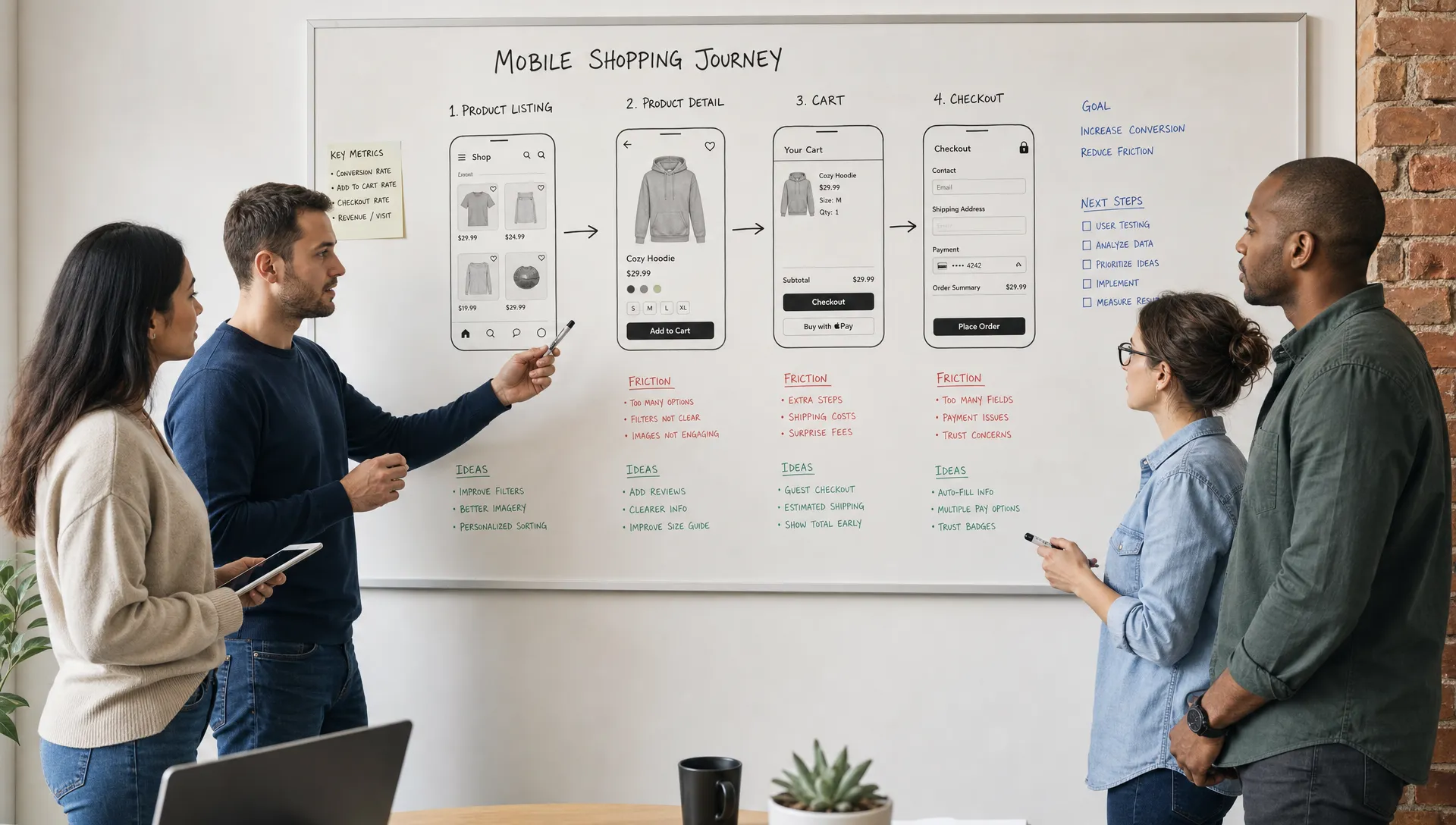
| Funnel area | Common retail leak | CRO tactic | Metric to watch |
|---|---|---|---|
| Product listing pages | Shoppers cannot narrow choices quickly | Improve filters, sorting, badges, and product cards | PLP-to-PDP click rate |
| Product detail pages | Shoppers lack confidence | Clarify benefits, sizing, reviews, delivery, and returns | Add-to-cart rate |
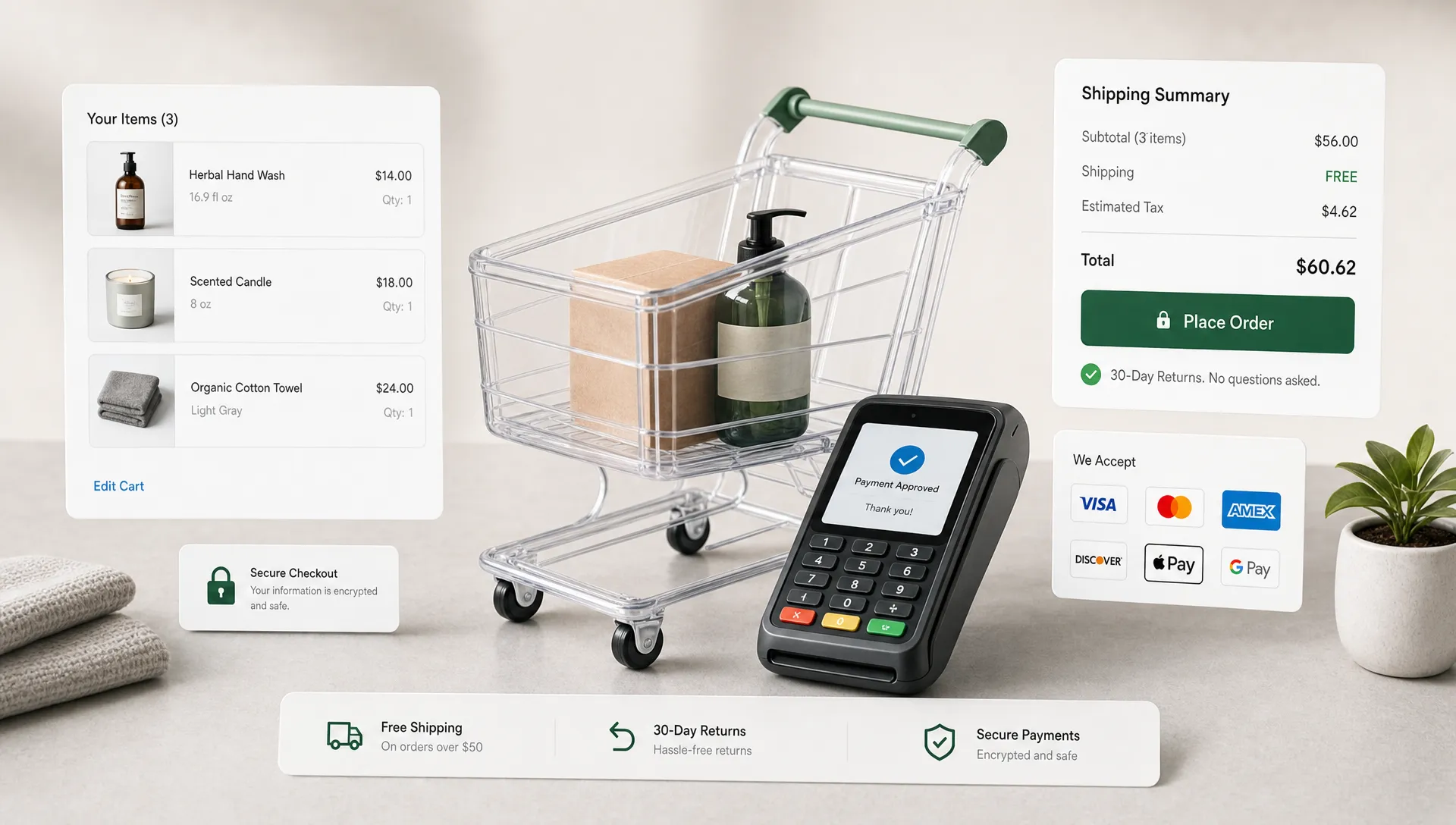
| Cart | Costs appear too late | Surface shipping, promos, taxes, and delivery timing earlier | Cart-to-checkout rate |
| Checkout | Too much effort or uncertainty | Reduce fields, add guest checkout, improve payment options | Checkout completion rate |
| Mobile experience | Friction feels amplified | Improve speed, tap targets, sticky actions, and layout | Mobile conversion rate |
If you want a deeper framework for finding these leaks, Space Dinosaurs has covered how to uncover hidden revenue in your existing traffic before spending more on acquisition.
Make product discovery faster and more intuitive
Retail shoppers often arrive with partial intent. They may know the category, occasion, size, price range, or problem they want to solve, but not the exact SKU. CRO starts by helping them move from uncertainty to a short list quickly.
For category and collection pages, prioritize clarity over visual clutter. Product cards should show the information shoppers need to decide whether to click. That often includes price, color options, review rating, sale status, key benefit, availability, and relevant badges such as “best seller,” “new,” or “low stock.”
Filters should match how customers actually shop. A fashion brand may need fit, size, color, material, occasion, and length. A home goods retailer may need dimensions, room, style, assembly, and delivery availability. If filters reflect internal taxonomy instead of shopper intent, users are forced to work too hard.
Search also deserves attention. Strong site search can recover high-intent shoppers, but weak search sends them away. Review zero-result searches, misspellings, synonym gaps, and queries that produce irrelevant results. Then improve search logic, merchandising rules, and autocomplete suggestions.
The goal is simple: reduce the number of decisions required to find a product worth considering.
Turn PDPs into confidence-building pages
Product detail pages are where interest becomes intent. A strong PDP answers the shopper’s internal questions before they become objections.
Most retail PDPs underperform because they treat product pages as static catalogs. High-converting PDPs act more like sales assistants. They explain the product, show it in context, reduce uncertainty, and make the next step obvious.
Focus on the questions customers ask before buying:
- What makes this product different?
- Will it fit my needs, body, space, routine, or style?
- Can I trust the quality?
- When will it arrive?
- What happens if it does not work for me?
- Is this the right version, size, color, bundle, or quantity?
Improve PDPs with benefit-led copy, clear variant selection, high-quality imagery, user-generated content, reviews, comparison details, shipping information, returns reassurance, and prominent add-to-cart behavior.
For products with higher consideration, add more decision support. This might include size guides, comparison tables, ingredient explanations, use cases, care instructions, room measurements, compatibility notes, or fit recommendations. For lower-consideration products, reduce clutter and make the buying path fast.
Remove price, shipping, and returns surprises
One of the most common conversion killers is late-stage surprise. A shopper who feels confident on the PDP can still abandon when shipping fees, taxes, delivery dates, return limits, or promo exclusions appear too late.
Baymard Institute’s long-running cart abandonment research consistently shows that extra costs and forced account creation are among the top reasons shoppers abandon checkout. The exact impact varies by category, but the lesson is universal: hidden friction becomes expensive at the bottom of the funnel.
Retail brands can reduce this by making commercial terms visible earlier. Show free shipping thresholds near product price and cart totals. Clarify delivery windows before checkout. Explain returns in plain language. If a promo code has exclusions, make those rules easy to understand.
This is not only a UX issue. It is a trust issue. Shoppers are more likely to continue when they feel the brand is being transparent.
Optimize mobile for thumbs, speed, and intent
Retail CRO is mobile CRO. Even when desktop conversion rates are higher, mobile is often where discovery begins. If the mobile experience is slow, cramped, or hard to navigate, the brand loses revenue before shoppers ever compare products.
Mobile optimization should focus on real shopping behavior, not just responsive layout. Navigation should be simple, filters should be usable with one hand, buttons should be easy to tap, and key information should not be buried below excessive content.
Speed is especially important. Core Web Vitals are not just technical scores. They influence how quickly shoppers can see products, interact with pages, and avoid layout shifts that cause accidental taps. Retail teams should prioritize the templates closest to revenue, especially product listing pages, product detail pages, cart, and checkout.
Space Dinosaurs has a dedicated breakdown of Core Web Vitals for ecommerce if your team wants to connect performance work to conversion impact rather than treating it as an isolated engineering task.
Simplify checkout without removing reassurance
Checkout is not the place to educate shoppers from scratch. It is the place to help them complete a decision they have already made.
That usually means fewer fields, fewer distractions, and clearer progress. Guest checkout should be easy to find. Forms should use sensible defaults, address autocomplete where appropriate, and clear error messages. Payment options should match customer expectations, especially on mobile.
However, simplification should not mean stripping away reassurance. Keep important trust signals visible, such as secure payment cues, delivery estimates, return summaries, and customer support access. If shoppers hesitate in checkout, they often need confidence, not more persuasion.
Retail brands should also review checkout analytics by step. A single-page checkout can still hide friction if field errors, payment failures, or promo code confusion are not tracked properly. Watch for drop-offs after shipping method selection, payment selection, account prompts, or error states.
Use personalization where it reduces effort
Personalization should not feel like a gimmick. In CRO, its job is to reduce effort, improve relevance, and help shoppers make better decisions faster.
Useful personalization can include recently viewed products, replenishment reminders, location-aware delivery messaging, size or fit memory, category-specific recommendations, and tailored merchandising based on behavior. AI can strengthen these experiences when it is connected to real customer intent and governed by clean data.
The key is to personalize moments where the shopper benefits. A returning customer may appreciate seeing their preferred size first. A shopper browsing winter coats may benefit from recommendations based on climate, use case, or price sensitivity. A customer comparing products may need a guided recommendation rather than a generic carousel.
Retailers exploring this area can learn how high-growth brands are applying AI across conversion systems in Space Dinosaurs’ article on using AI to out-convert competitors.
Build experiments around shopper problems
The best CRO programs are not test factories. They are learning systems.
A weak experiment starts with “let’s test a new layout.” A strong experiment starts with “customers do not understand the difference between these products, so we believe a comparison module will increase add-to-cart rate for category visitors.”
That distinction matters because it forces the team to define the problem, audience, hypothesis, and success metric before building anything.
A practical retail experimentation workflow looks like this:
- Identify friction through analytics, session recordings, customer support themes, reviews, and user testing.
- Prioritize opportunities by revenue impact, effort, confidence, and strategic importance.
- Write a clear hypothesis tied to one primary metric.
- Test on the right audience and template, not necessarily the whole site.
- Document results, including what did not work and why.
Not every change needs a full A/B test. If the issue is obvious, such as a broken promo field or confusing error message, fix it. Save controlled experiments for changes where the impact is uncertain and the traffic volume can support a valid read.
Align merchandising and CRO
Retail CRO often fails when it is treated as a UX-only function. Merchandising decisions can make or break conversion.
A collection page may be beautifully designed, but if the first row shows out-of-stock products, weak margin items, poor seasonal relevance, or confusing variants, performance will suffer. Similarly, recommendations can hurt conversion if they push products that are irrelevant, unavailable, or mismatched to shopper intent.
CRO and merchandising teams should collaborate on product ranking, promotional messaging, bundles, cross-sells, and inventory-aware experiences. For example, a retailer might test whether “complete the look” modules outperform generic recommendations, or whether product badges improve click-through when tied to real customer concerns such as “machine washable,” “wide fit,” or “ships today.”
The best retail experiences combine commercial strategy with shopper empathy.
Keep the tech stack fast, flexible, and measurable
CRO depends on execution speed. If every improvement requires a long development cycle, the team cannot learn quickly enough. That is why retail brands increasingly care about composable architectures, clean analytics, performance budgets, and reliable integrations.
A good CRO stack should help teams launch improvements without slowing the site or breaking measurement. Tag managers, testing tools, personalization engines, review platforms, search tools, payment systems, and analytics scripts all add value, but each one can also add latency or complexity.
The same principle applies beyond traditional retail. Adjacent digital commerce categories, including regulated gaming platforms, often prioritize modular onboarding, payments, analytics, compliance, and performance in one operating layer. For example, all-in-one modular platform models show how faster launch cycles and integrated operational tooling can become a competitive advantage when teams need to scale quickly.
For retail brands, the lesson is not to copy another industry’s stack. It is to make sure your own stack supports speed, stability, measurement, and iteration.
Measure CRO by revenue quality, not just conversion rate
Conversion rate is important, but it is not the only measure of success. A tactic that increases conversion while lowering average order value, increasing returns, or hurting margin may not be a win.
Retail CRO should connect to commercial outcomes. Track conversion rate alongside revenue per visitor, average order value, gross margin, return rate, customer acquisition cost, customer lifetime value, and repeat purchase behavior.
For example, aggressive discount messaging may lift first-order conversion but train customers to wait for promotions. A bundle may reduce friction and raise AOV, but only if it matches real buying behavior. A faster checkout may increase orders, but payment fraud or fulfillment issues can reduce the quality of that revenue.
The strongest CRO teams define success in business terms. They ask not only “did more people buy?” but “did the experience create profitable, sustainable growth?”
Create a continuous CRO operating rhythm
Retail conditions change constantly. Seasonality, inventory, pricing, customer expectations, media mix, and competitor offers all shift. A CRO program that runs once or twice a year cannot keep up.
Build a recurring operating rhythm instead. Weekly reviews can monitor funnel health and urgent issues. Monthly sessions can prioritize experiments and fixes. Quarterly planning can connect CRO work to major campaigns, platform changes, merchandising calendars, and customer research.
A healthy CRO rhythm includes analytics review, qualitative research, technical performance monitoring, experiment planning, implementation, documentation, and post-test learning. This turns optimization from a collection of isolated tactics into a durable growth capability.
Frequently Asked Questions
What is conversion rate optimization for retail brands? Conversion rate optimization for retail brands is the process of improving ecommerce experiences so more shoppers complete valuable actions, such as viewing products, adding to cart, checking out, or returning to buy again.
Which CRO tactic should a retail brand start with? Start by identifying the biggest revenue leak in your funnel. For many retailers, the highest-impact opportunities are on mobile product pages, product listing pages, cart, and checkout.
How long does it take to see results from CRO? Some fixes, such as removing checkout friction or improving page speed, can show impact quickly. Larger experimentation programs usually need several weeks or months to gather enough data and build repeatable learnings.
Is A/B testing always necessary for CRO? No. A/B testing is useful when the impact of a change is uncertain and traffic volume is sufficient. Clear defects, confusing copy, broken forms, and performance issues should often be fixed directly.
How should retail brands measure CRO success? Measure conversion rate alongside revenue per visitor, average order value, margin, return rate, customer lifetime value, and customer satisfaction. CRO should improve revenue quality, not just order volume.
Turn conversion opportunities into measurable retail growth
Retail CRO works best when strategy, UX, engineering, analytics, and performance optimization move together. The opportunity is rarely one magic test. It is the compounding effect of faster pages, clearer product experiences, smarter personalization, cleaner checkout, and continuous experimentation.
Space Dinosaurs helps retail brands modernize ecommerce experiences, improve performance, and turn digital friction into revenue growth. If your site has traffic but conversion is not where it should be, now is the time to treat CRO as a growth system, not a side project.