
For retail leaders, the question is rarely whether customers use mobile. They do. The harder question is whether a native app deserves budget, roadmap attention and long-term operational support.
The short answer: retailers should hire an ecommerce mobile app company only when the app creates a distinct customer experience that the mobile website cannot deliver as effectively. If the app is just a smaller version of the site, the investment is likely to underperform. If it improves loyalty, repeat purchase, in-store utility, personalization or customer lifetime value, it can become a powerful channel.
A good decision starts with separating mobile traffic from app demand.
Mobile traffic is not the same as mobile app opportunity
Many retailers see that most sessions come from phones and conclude that an app is the next logical move. That can be true, but it is not automatic.
Mobile web is still the broadest access point for discovery, search, ads, email, social and first-time shopping. Customers can land on a product page without installing anything. A native app, by contrast, asks for a larger commitment. The customer must find it, download it, grant permissions, keep it installed and remember to use it.
That extra friction means the app has to earn its place. For many retailers, the first investment should be a faster, cleaner mobile storefront. Slow product listing pages, heavy scripts, poor search, confusing checkout and weak Core Web Vitals will hurt both web performance and any future app strategy. If speed is already a concern, it may be smarter to address why e-commerce retail teams need faster storefronts before adding a second customer-facing channel.
An app should not be a workaround for unresolved ecommerce fundamentals. It should be an extension of a retail experience that already has strong product data, reliable inventory, usable checkout, clear analytics and a reason for customers to return.
When hiring an ecommerce mobile app company makes sense
A dedicated ecommerce mobile app company can be valuable when the mobile experience needs native capabilities, deeper customer engagement or a specialized delivery model. The strongest cases usually share one trait: customers have a reason to come back frequently.
Retailers with high repeat purchase behavior are often better candidates than retailers selling low-frequency, considered purchases. Beauty, grocery, fashion basics, pet supplies, wellness, home replenishment and membership-driven retail can benefit from app experiences that make reordering, discovery and loyalty easier.
An app may make sense when it can support:
- Faster repeat checkout for known customers
- Personalized recommendations based on browsing, purchase and preference data
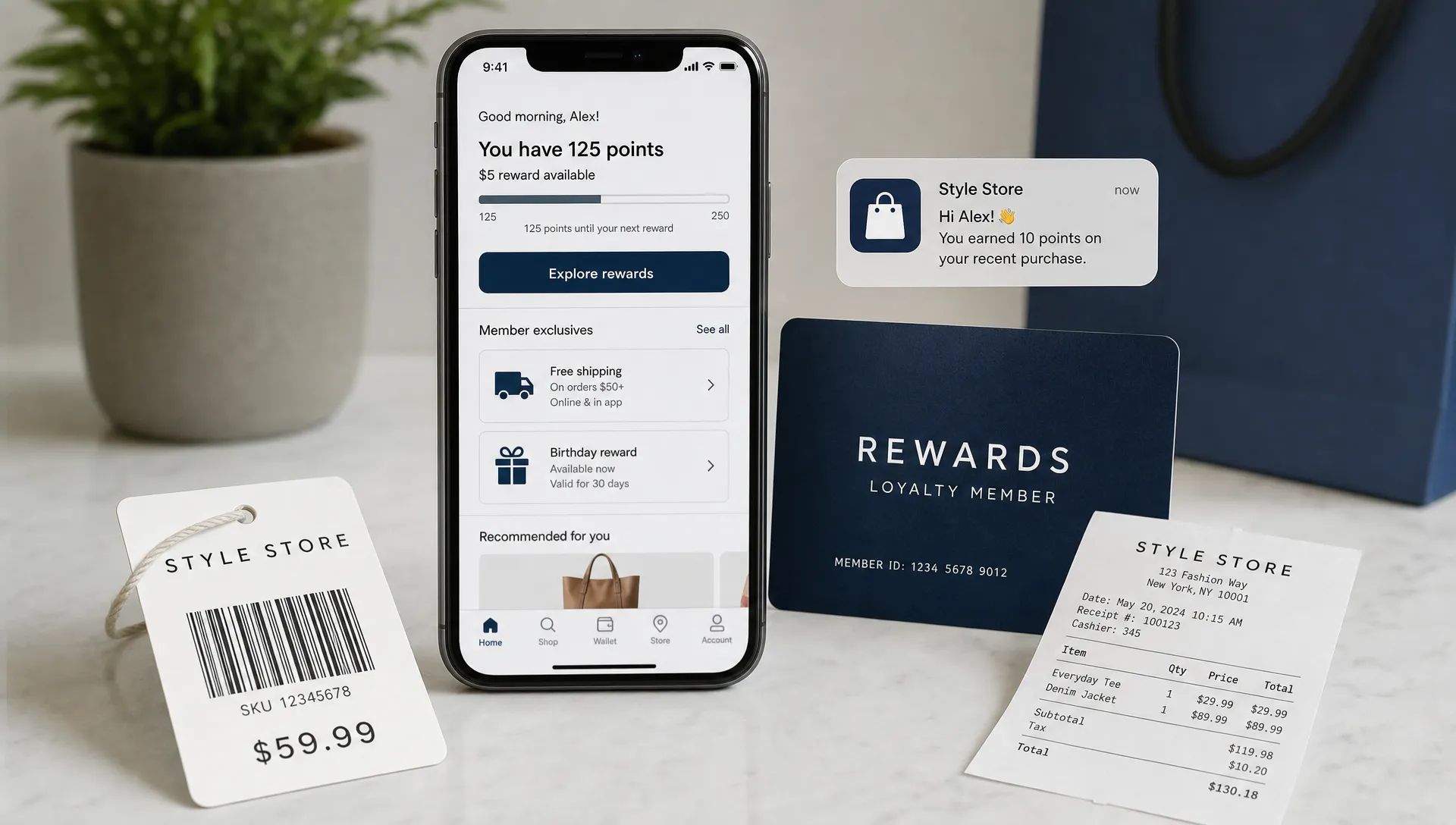
- Loyalty access, rewards tracking or member-only experiences
- Push notifications for replenishment, back-in-stock alerts or local store events
- Barcode scanning, store mode, pickup support or other omnichannel functions
- Product drops, limited releases or community-led commerce
- App-only content that customers genuinely value
The key word is genuinely. Push notifications do not create loyalty on their own. A loyalty wallet does not matter if the program is weak. A barcode scanner is useful only if it solves a real in-store problem. Native features should map to customer behavior, not internal enthusiasm for having an app icon.
A strong app partner will challenge the premise before they quote the build. They should ask how often customers buy, what mobile pain points exist today, how app users will be acquired, which capabilities are truly native and what incremental revenue would justify the investment.
When retailers should not hire a mobile app company yet
There are also clear signs that a retailer is not ready for app development.
If the mobile site is slow, the checkout leaks revenue or product data is inconsistent, an app may simply duplicate the same operational problems in another environment. If customer retention is weak because the offer lacks differentiation, an app will not fix the strategy. If teams cannot measure conversion, retention and profitability on the existing store, they will struggle to prove app ROI.
Retailers should be cautious when the app idea is driven by competitor pressure rather than customer evidence. We need an app because our competitors have one is not a business case. Neither is we want push notifications. The real question is whether customers will choose the app often enough to offset build, integration, maintenance, marketing and release management costs.
Another warning sign is a roadmap that starts with too many features. Trying to launch with every account, loyalty, content, store, AR, social and personalization idea at once usually slows delivery and clouds measurement. A focused app should prove a small set of high-value use cases first.
Native app, PWA or mobile web: choosing the right path
Retailers do not always need a native app to improve mobile commerce. Depending on the problem, a responsive site, progressive web app, headless storefront or native app may be the better option.
| Option | Best fit | Strengths | Tradeoffs |
|---|---|---|---|
| Responsive mobile web | Broad acquisition and first-time purchase | Easy access from search, ads, email and social | Limited native device features |
| Progressive web app | Faster app-like web experience without app store friction | Good performance potential and install-like behavior | Native capabilities vary by browser and device |
| Native mobile app | High-frequency customers and loyalty-led commerce | Push notifications, deeper device integration and persistent login | Higher build, maintenance and acquisition effort |
| Composable mobile frontend | Retailers with complex systems and experience needs | More flexibility across channels and services | Requires strong architecture and governance |
The right choice depends on the customer journey. If most shoppers arrive through search and purchase once or twice a year, mobile web may be the highest ROI channel. If customers buy weekly, engage with loyalty and want personalized access, a native app becomes more realistic.
This is also where operating model matters. A retailer with a modern ecommerce stack, strong APIs and reliable data flows can move faster. A retailer with fragile integrations may need architecture work before app development begins.
Build the business case before the app roadmap
The best app conversations begin with economics, not features. An app has to create measurable value beyond what the existing store can deliver.
Useful questions include:
- How many customers are likely to download the app?
- What percentage will create an account, opt into notifications and make a purchase?
- Will app customers buy more often, spend more or stay longer?
- How will the retailer acquire app users without cannibalizing profitable web traffic?
- What operational costs will the app add across engineering, QA, merchandising, analytics and customer support?
- Which app behaviors will prove the concept in the first 90 to 180 days after launch?
Scenario planning is underrated here. Before committing to a multi-quarter roadmap, leadership teams can pressure-test assumptions using workshops, financial models or even business simulation software that helps teams rehearse strategic tradeoffs before real budget is spent.
A simple app business case should connect product decisions to commercial outcomes.
| Business question | Metric to watch | Why it matters |
|---|---|---|
| Are customers adopting the app? | Downloads, account creation and first purchase rate | Installs alone do not prove value |
| Are app users more valuable? | Repeat purchase rate, average order value and customer lifetime value | The app should improve customer economics |
| Is engagement healthy? | Active users, notification opt-ins and session frequency | Engagement shows whether the app has a role in daily or weekly behavior |
| Is the app profitable? | Incremental revenue, margin and support cost | Revenue without profitability can mislead teams |
| Is the channel improving retention? | Churn, reorder interval and loyalty participation | Apps are often strongest as retention channels |
What an ecommerce mobile app company should actually provide
A credible ecommerce mobile app development company should do more than design screens and ship code. Retail apps touch merchandising, inventory, promotions, customer data, loyalty, payments, analytics and operations. That means the partner needs ecommerce context, not just mobile engineering skill.
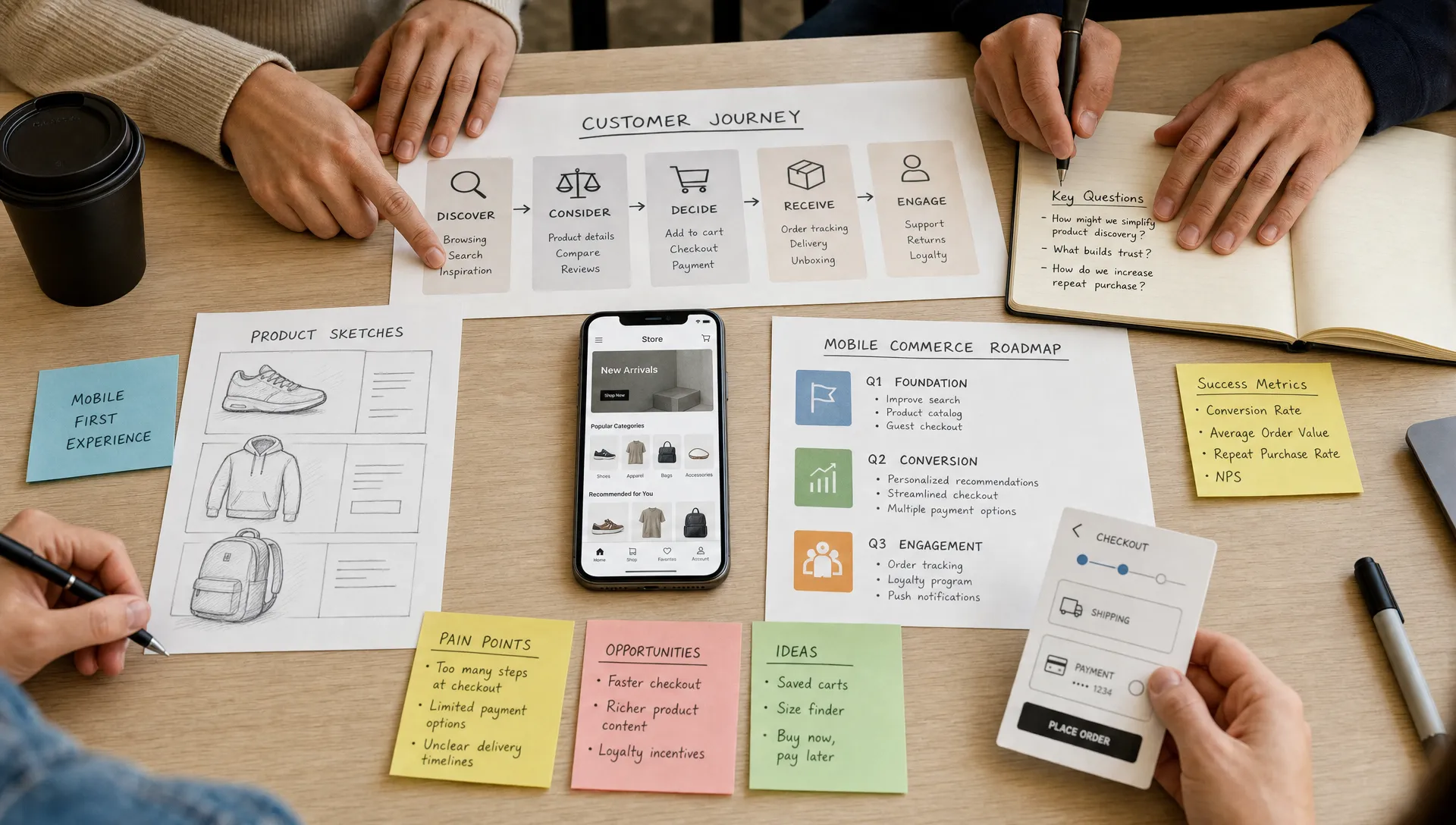
At minimum, the engagement should include discovery, customer journey mapping, technical architecture, UX design, integration planning, analytics design, quality assurance and post-launch optimization. If the company jumps straight to feature lists without understanding your customer segments, platform constraints or margin model, the process is already drifting.
You should expect clear thinking around:
- App strategy and channel fit
- Customer research and mobile UX design
- Integration with ecommerce, CMS, ERP, OMS, loyalty, CRM and analytics systems
- Performance, accessibility and release quality
- App store submission and version management
- Measurement planning for activation, conversion, retention and profitability
- Ongoing experimentation after launch
This is similar to what retailers should expect from any serious ecommerce partner. If you are comparing broader web and platform needs alongside app development, it is worth reviewing what to expect from an ecommerce development company before narrowing the scope to mobile.
The best partners will also help you decide not to build yet if the case is weak. That may sound counterintuitive, but it is a sign of maturity. A company that only sells the app may not be the right advisor for the retail business.
How to evaluate an ecommerce mobile app partner
Vendor selection should be grounded in retail outcomes. A polished app portfolio is useful, but it is not enough. You need to know whether the partner can handle the messy parts of commerce: promotions, product variants, returns, inventory states, localization, customer identity, privacy requirements and analytics accuracy.
Ask candidates how they approach tradeoffs between native app development, progressive web apps and mobile web optimization. A partner that recommends the same answer for every retailer is probably selling a preferred delivery model rather than solving your problem.
Good evaluation questions include:
- Which retail app use cases have you delivered, and what outcomes were measured after launch?
- How do you decide whether a native app is better than improving mobile web?
- What integrations do you need to review before estimating scope?
- How do you design analytics so app performance can be compared with web performance?
- What does post-launch optimization look like after version one?
- How do you manage app store releases, regression testing and urgent fixes?
- What work will our internal team need to own after launch?
Pay close attention to the discovery process. If a vendor does not ask about retention, merchandising workflows, customer acquisition, app user economics and existing technical debt, they may underestimate the real work.
It also helps to know the warning signs. Retailers evaluating any ecommerce partner can use these ecommerce agency red flags as a practical filter before signing a statement of work.
What a sensible first app release looks like
A strong first release is not the biggest possible app. It is the smallest version that proves the channel has a role in the customer relationship.
For many retailers, that means starting with account access, product discovery, reliable search, saved preferences, streamlined checkout and one or two retention features. Loyalty, replenishment or back-in-stock alerts can be powerful if they are central to the business model. Advanced features should wait until the app has active users and clean data.
The first release should also include analytics from day one. Teams need to see where users drop off, which features drive repeat visits, whether push notifications create purchases or unsubscribes and how app customers behave compared with mobile web customers.
A practical launch plan usually includes a controlled rollout, a retention-focused marketing plan and a post-launch backlog based on real behavior. Without that, retailers risk treating launch day as the finish line when it is only the start of channel learning.
So, should retailers hire an ecommerce mobile app company?
Yes, if the app has a clear commercial role, customers have a reason to use it repeatedly and the retailer is ready to support it as a living product.
No, or at least not yet, if the mobile website is underperforming, analytics are weak, the value proposition is unclear or the proposed app simply mirrors the existing store.
The better question is not do we need an app? It is what mobile experience will create the most value for customers and the business over the next 12 to 24 months? Sometimes that answer is a native app. Sometimes it is a faster storefront, a cleaner checkout, better personalization, stronger retention marketing or a more flexible commerce architecture.
Retailers that answer the strategy question first will hire better partners, build leaner roadmaps and avoid expensive mobile products that customers ignore.
Frequently Asked Questions
Is a native app better than a mobile ecommerce website? Not always. A native app is better when customers return frequently and benefit from features like loyalty access, push notifications, saved preferences or in-store tools. A mobile website is usually better for broad discovery, search traffic and first-time purchases.
How much does ecommerce mobile app development cost? Costs vary widely based on scope, platforms, integrations, design complexity and post-launch support. Retailers should evaluate total cost of ownership, including maintenance, QA, app store management, analytics and marketing, not just initial build cost.
Should a retailer build an iOS app, Android app or both? The answer depends on customer device data, geography and revenue opportunity. Many retailers eventually support both, but a phased approach can make sense if one platform clearly represents the higher-value audience.
Can a progressive web app replace a native retail app? In some cases, yes. A progressive web app can improve speed and create an app-like experience with less install friction. Native apps are stronger when deeper device features, app store presence or persistent customer engagement are central to the strategy.
What should retailers fix before building an app? Retailers should address mobile site speed, checkout usability, product data quality, analytics accuracy, customer identity, inventory reliability and retention strategy before investing in a native app.
Build the mobile commerce experience your customers will actually use
If your team is debating whether to hire an ecommerce mobile app company, start with the customer behavior and business case, not the deliverable. The right answer may be a native app, a faster mobile storefront or a broader ecommerce modernization plan.
Space Dinosaurs helps retail brands evaluate, design and optimize digital commerce experiences with a focus on performance, UX, analytics and AI-enabled retail growth.