

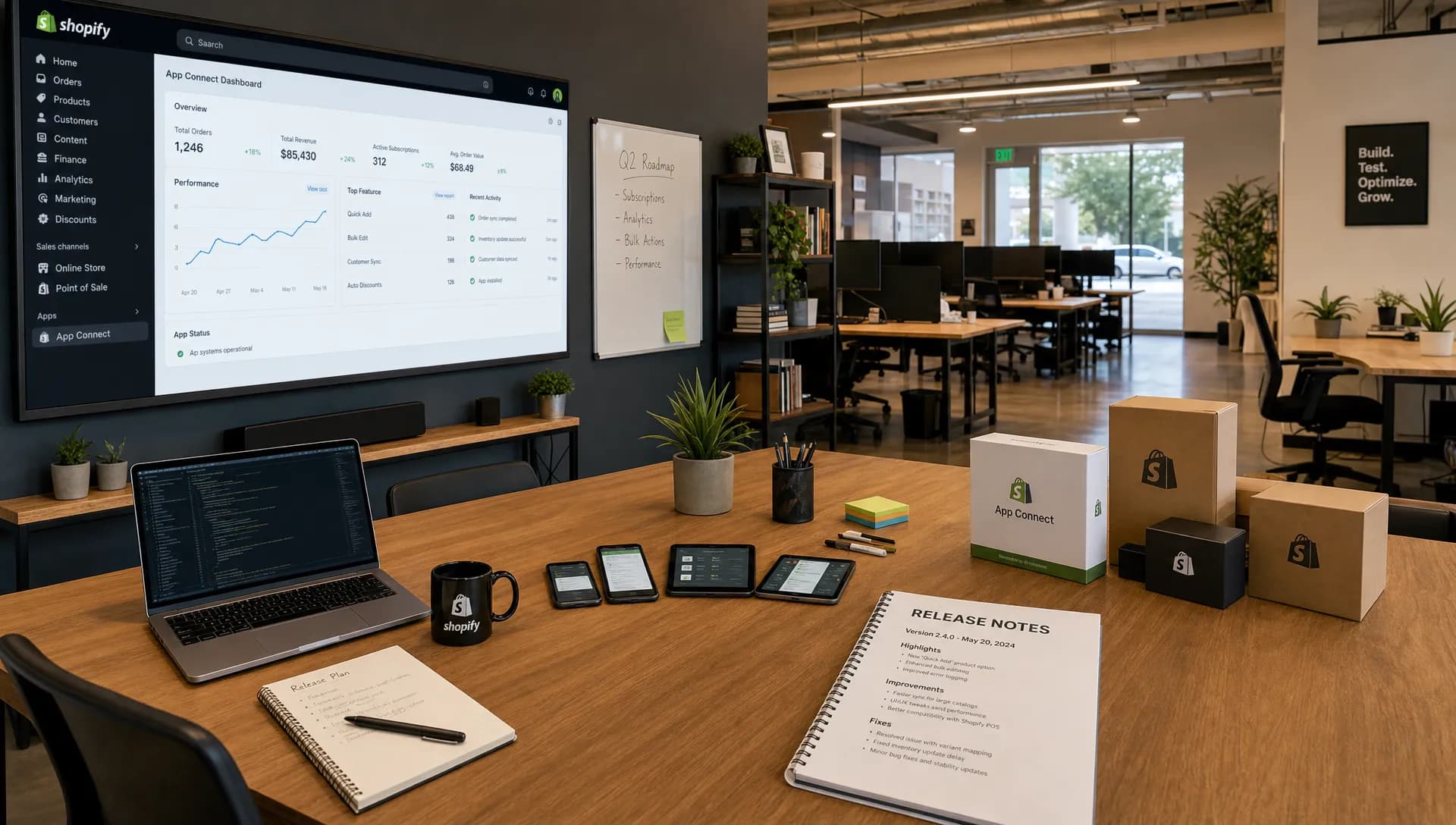
Retailers usually feel app pain before they can name it. A shopper cannot find the right product, a delivery rule breaks at checkout, a merchandising task takes three tools or a loyalty experience feels bolted on. Shopify app development services are meant to solve those gaps with software that fits the business, not with another generic widget added to an already crowded stack.
The best apps do more than add features. They shape the path from discovery to purchase, reduce operational drag and make the storefront feel more useful to the shopper. That might mean a guided buying flow for complex products, a custom integration between Shopify and an ERP or a faster way for teams to launch promotions without developer help.
For retail leaders, the question is not whether a Shopify store can support an app. It is whether the app creates a better experience for customers and the internal teams serving them.
Where Shopify app development services create experience gains
A strong app starts with a specific experience problem. If the business goal is vague, the result tends to be vague too. Custom development works best when it targets a measurable friction point, such as low add-to-cart rates on configurable products, poor visibility into inventory or manual post-purchase support.
Shopify gives retailers a flexible foundation, but every brand has its own selling model. A beauty brand may need a replenishment experience. A furniture brand may need delivery restrictions by ZIP code. A specialty retailer may need richer product comparison than a standard theme can support.
Faster decisions on complex products
High-consideration products often require more than a grid of thumbnails. Shoppers compare dimensions, materials, use cases, warranties and delivery options. If those details are scattered across product pages, FAQs and customer support chat, conversion suffers.
A custom app can pull decision-making into one clean interaction. For example, a product finder can ask shoppers how they plan to use an item, match answers to product attributes and route them to a curated collection. For retailers selling premium wellness, outdoor living, appliances or specialty equipment, this kind of guided flow can feel less like a marketing add-on and more like a digital sales associate.
A store with a premium home wellness catalog, for instance, may need shoppers to compare saunas, hot tubs, cold plunges and steam systems across size, installation type and recovery goals. A purpose-built experience can help customers narrow options without making them read every specification manually.
Cleaner workflows for shoppers and teams
Shopify app development services are most useful when they improve both sides of the transaction. A better customer experience usually depends on a better merchant workflow behind it. If a team cannot update a quiz, adjust merchandising logic or troubleshoot an integration quickly, the front-end experience will decay over time.
That is why app planning should include the admin experience, not just the storefront. The best custom tools give teams clear controls, sensible defaults and enough flexibility to respond to seasonal campaigns or changing inventory without breaking the customer journey.
From app sprawl to purposeful experience design
Many Shopify stores accumulate apps one problem at a time. One app handles reviews, another handles bundles, another handles returns and three more modify the cart. That can work for a while, but it often creates slow pages, conflicting scripts and confusing admin workflows.
A custom app is not automatically better than an off-the-shelf app. The advantage appears when the custom solution replaces overlapping tools, connects data cleanly or supports a workflow the business cannot run well with standard apps. If storefront complexity is already becoming a growth constraint, the same principles used to reduce Shopify storefront complexity apply to app strategy too.
Custom does not always mean more code
For teams, Shopify app development services should simplify the stack. Sometimes that means building a custom embedded app. Sometimes it means extending an existing Shopify feature, improving theme logic or integrating a proven third-party app more cleanly.
The goal is not to build for the sake of ownership. The goal is to reduce the gap between what the retailer needs and what the current system can do reliably. A lighter solution that solves the real problem is better than a large custom build that becomes expensive to maintain.
| Experience problem | App approach | Better outcome |
|---|---|---|
| Shoppers abandon complex categories | Guided selling or product finder | Faster product confidence |
| Teams update product data manually | Shopify to PIM or ERP integration | Fewer errors and faster launches |
| Promotions require developer tickets | Merchant-facing campaign controls | More agile merchandising |
| Cart rules are too rigid | Custom cart logic or checkout extension | Clearer offers and fewer exceptions |
| Customer support repeats the same answers | Self-serve post-purchase app | Lower support burden and better transparency |
What better app architecture looks like
A well-built app respects the storefront instead of fighting it. It should load only where needed, avoid blocking critical rendering, handle errors gracefully and expose the right data to analytics. If an app depends on external systems, it should fail in a way that protects checkout and core shopping tasks.
Architecture also affects future cost. A brittle app may solve today’s use case but make every future campaign harder. A maintainable app uses clear data models, documented settings and a development pattern that another qualified team can understand later.
Retail use cases that benefit most from custom apps
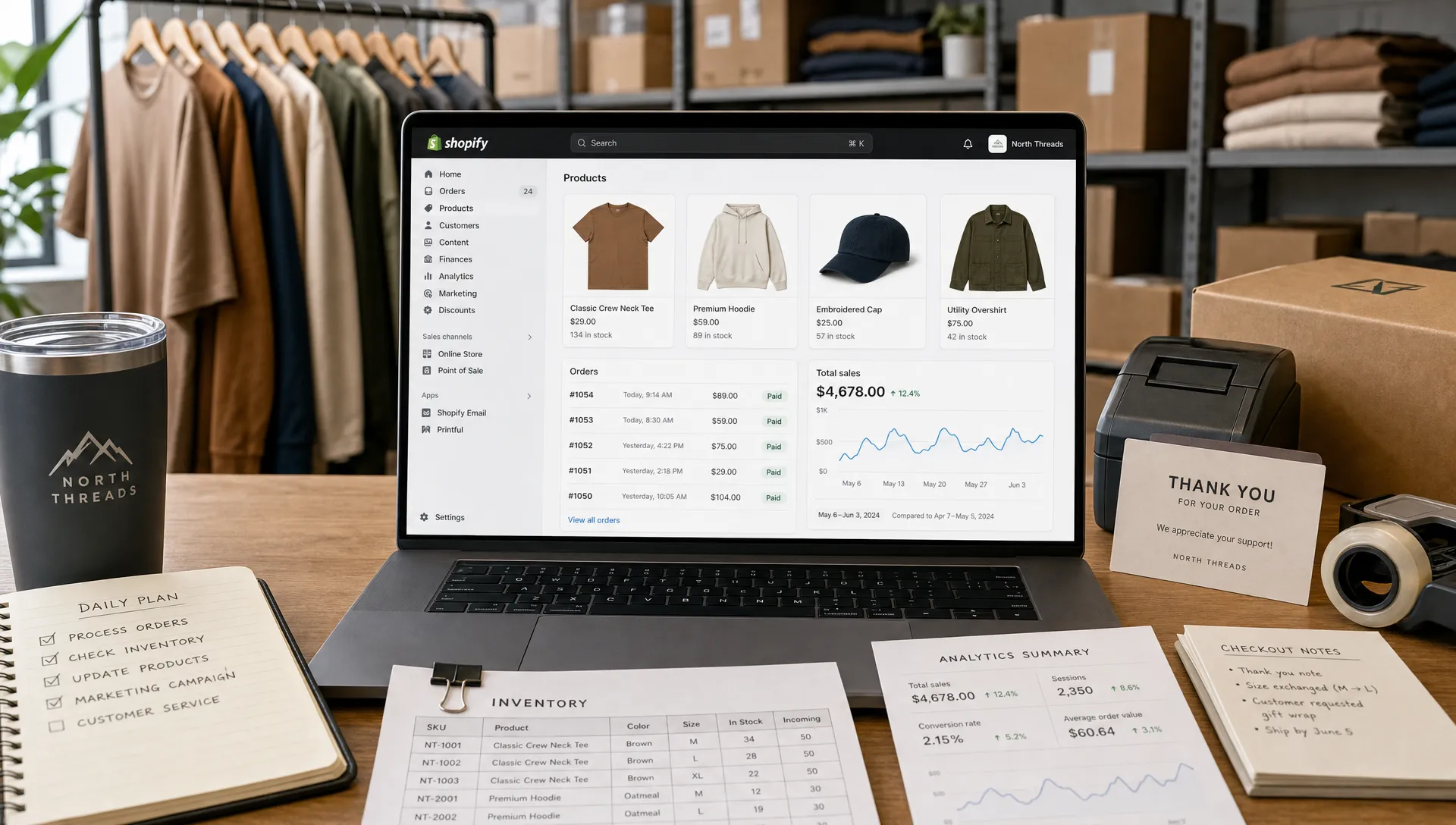
Not every Shopify store needs custom app development. Smaller stores with straightforward catalogs can often use native Shopify features and carefully selected apps. Custom work becomes more compelling when the buying journey, operations or data model are specific enough that generic apps create friction.
When scoped correctly, Shopify app development services can help retailers turn their operational differences into a better shopping experience. That is especially true when the app supports a business model competitors cannot easily copy.
Guided selling and product discovery
Product discovery is one of the strongest use cases for custom app development. A quiz, finder, configurator or recommendation flow can connect customer intent to the right products faster than navigation alone. This is especially valuable for large catalogs, technical products and categories where shoppers do not know the right terminology.
The app should not replace strong taxonomy or collection design. It should complement them. If the core storefront needs improvement first, start with the fundamentals of Shopify product discovery, then decide where custom logic adds value.
Pricing, bundling and merchandising rules
Retailers often need promotional logic that goes beyond simple discount codes. Bundles, kits, threshold offers, volume incentives and personalized recommendations can all raise average order value, but only if they are easy to understand.
A custom app can enforce rules in the background while presenting the offer in plain language. For example, a customer should see why a bundle is recommended, what is included and how the price changes before they reach checkout. If the offer feels hidden or manipulative, the app may increase short-term clicks while damaging trust.
Operations, integrations and post-purchase care
Some of the most valuable apps are barely visible to shoppers. They sync inventory, route orders, enrich customer records or automate support workflows. These back-end improvements still affect customer experience because they reduce errors, delays and confusion.
A custom post-purchase portal can also improve satisfaction after the sale. Customers may want delivery updates, warranty instructions, installation guidance or replenishment reminders. When this information lives in one branded experience, support teams spend less time answering repeat questions and customers feel less abandoned after checkout.
How AI changes Shopify app experiences
AI makes Shopify app development services more powerful when it is tied to a useful retail workflow. The value is not in adding a chatbot to every page. The value is in helping shoppers make better decisions, helping teams act on data and making personalization easier to manage.
For example, AI can support conversational commerce when customers have nuanced questions about fit, compatibility or use case. It can help classify support tickets, summarize product feedback or generate merchandising suggestions based on performance data. In each case, the app should keep the human experience in focus.
Personalization without losing control
Personalized experiences can improve relevance, but retailers still need guardrails. Merchandising teams should be able to control what products are eligible for recommendations, exclude low-margin items where needed and understand why certain suggestions appear.
A well-designed AI-enabled app gives teams visibility into logic and performance. It does not become a black box that changes the storefront without accountability. This matters for brand trust, compliance and long-term optimization.
Better testing and optimization loops
Custom apps can also make experimentation easier. If a retailer wants to test a new guided flow, bundle structure or post-purchase sequence, the app should expose the right events to analytics. Without clean measurement, teams may mistake novelty for impact.
That is where app development connects to conversion strategy. A better app should improve a specific metric, such as product finder completion, add-to-cart rate, checkout progression, average order value or repeat purchase behavior. Broader Shopify conversion rate optimization can help teams decide which friction points deserve custom development first.
How to scope an app without hurting performance
The easiest way to create a bad app is to start with a feature list instead of a journey map. Retailers should define the shopper problem, the merchant workflow, the required data and the success metric before development begins.
A good brief for Shopify app development services should also include performance expectations. Apps can affect page speed, script weight and Core Web Vitals, especially when they load on product pages, collection pages or cart. Performance cannot be treated as cleanup after launch. It needs to shape technical choices from the beginning.
Useful scoping questions include:
- What customer or team problem does this app solve?
- Which Shopify surfaces will the app touch?
- What data does it need to read, write or sync?
- What happens if an external service is unavailable?
- Which metrics prove the experience is better?
- Who will maintain the app after launch?
Build for the customer and the operator
A custom app should be easy for shoppers to use and easy for operators to manage. If a guided selling flow requires developer support for every copy change, the tool will become stale. If an integration hides errors from the operations team, customer support will discover problems after customers do.
Good admin design reduces dependency on developers without giving teams risky controls. That might mean editable content fields, approval states, clear error messages, preview modes or role-based access. The exact controls depend on the app, but the principle is consistent: a better internal experience protects the external one.
Keep maintenance part of the plan
Apps are not one-time assets. Shopify APIs evolve, checkout capabilities change, browsers update and business rules shift. Retailers should budget for monitoring, updates and improvements so the app continues to support the experience it was built to create.
Maintenance also includes documentation. Future developers and business users need to know why the app exists, how it works, what systems it depends on and how to evaluate changes. Without that context, even a well-built app can become a source of risk.
Measuring whether the experience improved
Shopify app development services should be judged by outcomes, not by how custom the solution feels. A beautiful app that no one uses is not a better experience. A small operational app that prevents order errors may be extremely valuable even if shoppers never notice it directly.
The right metrics depend on the use case, but every app should have a clear measurement plan before launch.
| App type | Primary metric | Supporting signals |
|---|---|---|
| Product finder | Completion rate | Add-to-cart rate, product page engagement |
| Bundle builder | Average order value | Attach rate, margin, cart abandonment |
| Inventory integration | Order accuracy | Support tickets, fulfillment delays |
| Post-purchase portal | Self-service rate | Repeat contacts, customer satisfaction |
| AI support assistant | Resolution quality | Escalation rate, answer usefulness |
Measurement should combine analytics with qualitative feedback. Session recordings, support conversations and customer surveys can reveal why a metric changed. This matters because an app can improve one number while creating new friction elsewhere.
Frequently Asked Questions
What are Shopify app development services? Shopify app development services help retailers design, build, integrate and maintain custom apps or app extensions for Shopify stores. They can support customer-facing experiences, admin workflows, data integrations or operational automation.
When should a retailer build a custom Shopify app instead of using an existing app? Custom development makes sense when existing apps cannot support the retailer’s workflow, data model, performance standards or customer experience. If a proven app solves the problem cleanly, custom development may not be necessary.
Can custom Shopify apps improve site speed? They can, especially when they replace several overlapping apps or load more efficiently. Poorly built custom apps can also hurt performance, so speed and Core Web Vitals should be part of the development brief.
Do Shopify apps only affect the storefront? No. Many valuable apps improve back-end operations, such as inventory sync, order routing, customer service workflows or merchandising controls. Those internal improvements often lead to a smoother customer experience.
How long does Shopify app development take? Timelines vary based on scope, integrations, testing needs and review requirements. A focused internal tool may be faster than a complex customer-facing app with multiple systems, custom interfaces and analytics instrumentation.
Create apps that make retail feel easier
Better Shopify experiences rarely come from adding more disconnected tools. They come from understanding where shoppers struggle, where teams lose time and where the current stack no longer fits the business.
Space Dinosaurs helps retail brands modernize e-commerce experiences with AI-enabled engineering, human-centered UX, analytics and ongoing optimization. If your Shopify store needs custom app thinking without more unnecessary complexity, Space Dinosaurs can help you turn the right app ideas into faster, clearer retail experiences.