

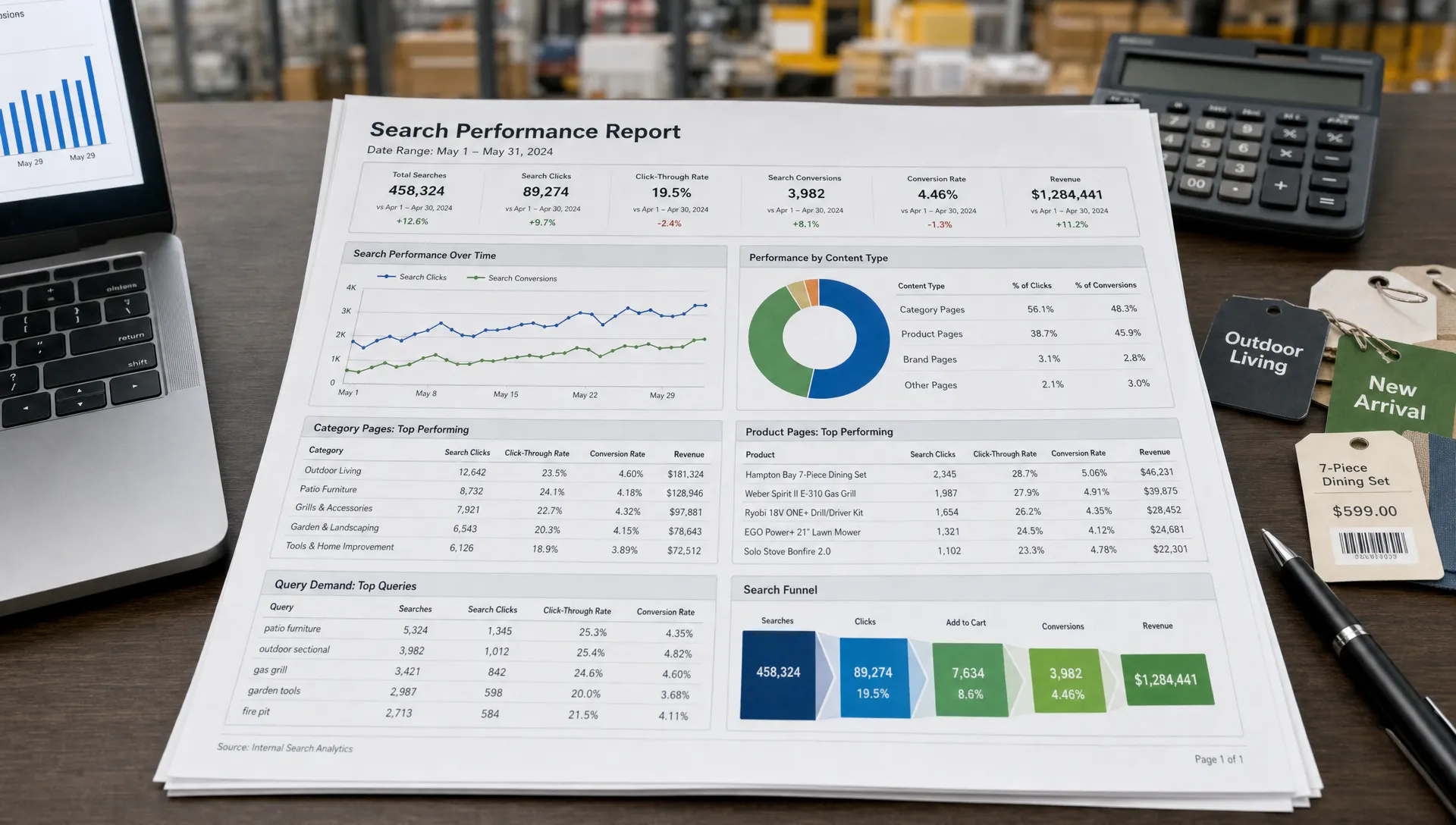
An ecommerce SEO consultant finds revenue opportunities by connecting search demand to margin, inventory, UX, technical health and conversion data. Rankings matter, but only when they send qualified shoppers to pages that can convert. The real work is deciding where organic visibility can increase profitable sales, where the site is leaking demand and which fixes should be prioritized first.
That approach is especially important for retail brands with large catalogs, seasonal inventory, multiple acquisition channels and constant site changes. SEO cannot sit apart from merchandising, performance optimization or product discovery. The consultant needs to understand how shoppers search, how the platform serves pages, how visitors move through the funnel and how each fix could affect revenue.
What an Ecommerce SEO Consultant Looks for First
The first discovery phase is not a keyword export. It is a revenue map. A strong consultant starts by grouping the store into page types, usually home, category, subcategory, product listing, product detail, buying guide, comparison and support content. Each group has a different job in the buying journey.
From there, the consultant compares organic sessions, revenue, conversion rate, average order value, stock status, margins where available and query data from tools like Google Search Console. A good ecommerce SEO consultant will also look for mismatches, such as pages with high impressions but poor click-through rate, pages with strong traffic but weak conversion or profitable categories with almost no organic visibility.
| Signal | What it may reveal | Revenue question |
|---|---|---|
| High impressions, low clicks | Weak title, meta description or brand relevance | Can better search snippets win more qualified traffic? |
| High traffic, low conversion | UX friction, poor product fit or unclear intent | Is the page attracting the wrong shopper or failing the right one? |
| Low visibility, high margin | Underdeveloped category or content gap | Should this area receive more SEO investment? |
| Indexed filters or duplicates | Crawl waste and diluted relevance | Are search engines spending attention on pages that do not sell? |
| Strong paid search spend | Proven commercial demand | Can organic pages lower blended acquisition cost? |
Step 1: Map Search Demand to Commercial Value
Search demand becomes useful only when it is tied to what the business actually wants to sell. A consultant will separate informational queries from commercial, transactional and post-purchase searches, then assign each cluster to the page type most likely to satisfy the intent.
For example, a store selling wellness and recovery devices, such as professional-grade recovery and wellness devices, should not rely only on product pages. Shoppers may compare red light therapy panels, research compression therapy for legs or look for recovery equipment used by clinics and athletes. Those searches may need category copy, comparison guides, FAQs and product detail pages that explain specifications clearly.
An ecommerce SEO consultant also checks whether the business has pages for the most valuable query patterns. Many retailers have broad category pages but miss subcategories that shoppers search for with buying intent. Others have hundreds of products but no useful guide content to help shoppers choose between similar options.
The goal is not to create content for every query. It is to identify where search demand, assortment strength, margin potential and conversion likelihood overlap.
Step 2: Find Technical Bottlenecks That Suppress Sales
Technical SEO for ecommerce is rarely abstract. It affects which products get discovered, which pages rank and how efficiently search engines crawl a changing catalog. Common revenue blockers include faceted navigation problems, duplicate category pages, inconsistent canonical tags, orphaned subcategories, thin product pages, slow templates and JavaScript rendering issues.
An ecommerce SEO consultant will usually crawl the site, review index coverage, inspect XML sitemaps, compare canonical signals and check whether important commercial pages are easy for search engines to find. Large retail sites often waste crawl attention on low-value URLs created by filters, sorting parameters or internal search results. At the same time, profitable subcategories may sit too deep in the architecture to receive enough internal authority.
Performance belongs in this technical review as well. Core Web Vitals, server response times and template weight can influence both organic visibility and shopper behavior. Space Dinosaurs has covered this revenue connection in more detail in its guide to turning site speed into revenue, which is often where SEO, engineering and conversion teams need to work together.
Step 3: Audit Category and Product Pages Like Sales Assets
Category and product pages are not just SEO landing pages. They are commercial assets that need to help a shopper decide. A revenue-focused audit looks beyond word count and metadata to assess whether the page answers the questions a buyer has at that point in the journey.
For category pages, the consultant looks at naming, hierarchy, filter usability, product sorting, internal links, introductory copy, supporting FAQs and links to related categories. For product pages, the review covers titles, unique descriptions, imagery, specifications, availability, delivery information, reviews, variant handling and structured data.
A capable ecommerce SEO consultant will also compare organic landing page behavior by device. If mobile visitors land on a category page but rarely use filters or move to product pages, the issue may be product discovery rather than search visibility. If product pages attract traffic but fail to convert, missing trust signals or unclear buying information may be the constraint.
For a broader view of how these page types affect revenue, Space Dinosaurs explains the commercial mechanics of SEO in e commerce across technical foundations, site architecture and high-intent pages.
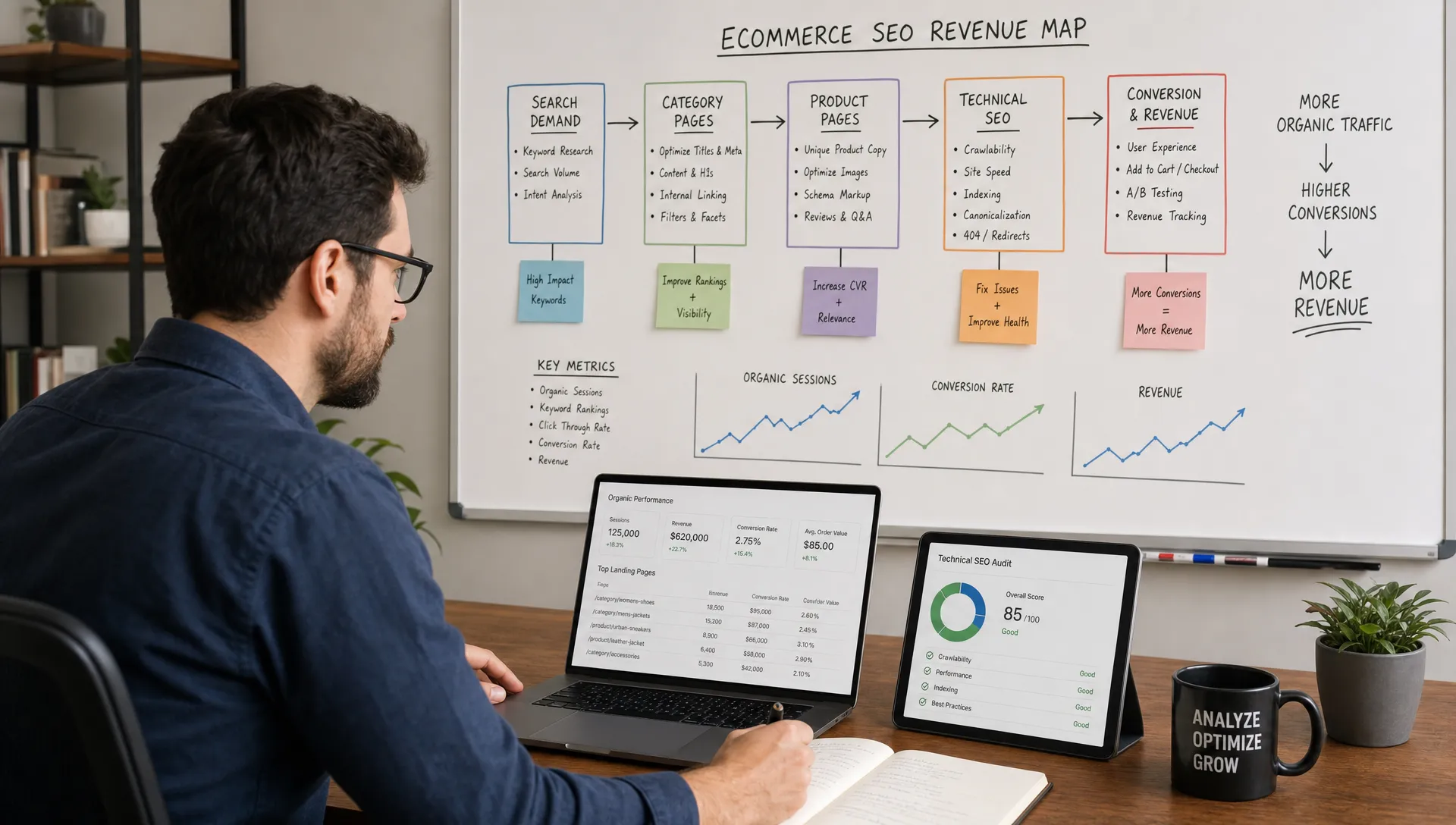
Step 4: Spot Conversion Leaks Organic SEO Alone Cannot Fix
SEO can bring the right shopper to the right page and still fail to create revenue if the experience blocks the purchase. That is why opportunity discovery needs to include conversion signals, not just rankings.
A consultant will inspect the path from organic landing page to product view, cart and checkout. They may look for confusing navigation, weak merchandising, poor on-site search, out-of-stock products ranking prominently, slow mobile templates, unclear pricing, unexpected shipping information or checkout friction. These problems can make SEO performance look weaker than it really is.
An ecommerce SEO consultant should flag where SEO recommendations depend on UX or CRO work. For example, creating a new subcategory may win traffic, but the page still needs useful filters, strong product sorting and a clear route to purchase. Optimizing a product page title may improve clicks, but conversion may remain flat if delivery information is hidden or product differences are unclear.
This is where SEO and conversion optimization overlap. Space Dinosaurs discusses the funnel side of this problem in its article on how conversion optimization services reduce revenue leaks.
Step 5: Use Internal Linking to Move Equity Toward Money Pages
Internal linking is one of the fastest ways to uncover missed revenue because it reveals how the site itself prioritizes pages. Many ecommerce sites link heavily to seasonal promotions, editorial content or recently launched products while stable, profitable categories receive little support.
A consultant reviews navigation, breadcrumbs, related categories, buying guides, product modules, footer links and blog-to-category links. The question is simple: do high-value commercial pages receive enough relevant internal links from pages that already have visibility and authority?
An ecommerce SEO consultant may find that useful buying guides attract organic traffic but do not link clearly to the categories that monetize the demand. They may also find that related subcategories are disconnected, making it harder for shoppers and search engines to understand the store’s full assortment.
Good internal linking does not mean adding keyword-heavy links everywhere. It means creating clear pathways that match shopper intent. A guide about choosing running recovery tools should link naturally to relevant compression therapy, massage gun or red light therapy categories. A product page should help shoppers compare alternatives, accessories and compatible items when that improves decision quality.
Step 6: Prioritize Revenue Opportunities, Not SEO Tasks
A long SEO audit can overwhelm a retail team if every issue looks equally urgent. The consultant’s job is to turn findings into a prioritized roadmap that balances upside, effort, confidence and operational risk.
An ecommerce SEO consultant might score opportunities using a simple framework. A high-margin category with rising demand, weak organic visibility and clear page quality issues should rank higher than a metadata cleanup on low-value pages. A technical fix that restores indexation for thousands of valid product pages may outrank a new blog content program. A mobile performance fix on top organic landing pages may beat a speculative keyword expansion.
The best prioritization also accounts for dependencies. Some SEO opportunities cannot be captured until platform constraints, analytics gaps or merchandising rules are fixed. Others are quick wins because they involve title testing, internal links, category copy improvements or cleanup of obvious indexation problems.
| Priority factor | Why it matters | Example |
|---|---|---|
| Revenue upside | Focuses effort on commercial impact | A profitable category with strong search demand |
| Confidence | Reduces speculative work | Clear Search Console demand and poor current ranking |
| Effort | Helps sequence work realistically | Template change versus copy update |
| Dependency | Prevents stalled recommendations | Development support needed for faceted navigation |
| Risk | Protects existing performance | Migration, canonical or noindex changes on live pages |
What a Strong Opportunity Report Should Include
A useful report should not read like a generic SEO checklist. It should explain where revenue is available, why the site is not capturing it today and what should happen next. For each opportunity, the recommendation should connect evidence to impact.
At minimum, a strong ecommerce SEO consultant report should include current organic revenue by key page type, query and landing page gaps, technical blockers, category and product page recommendations, internal linking priorities, conversion risks, measurement requirements and a roadmap ordered by business value.
The report should also define how success will be measured. Rankings can be useful indicators, but retail teams need metrics such as organic revenue, qualified sessions, landing page conversion rate, assisted revenue, click-through rate from search results, indexed commercial pages, Core Web Vitals performance and revenue per session.
This measurement layer is what keeps SEO from becoming a backlog of isolated tasks. It helps leaders compare SEO investments with paid media, retention, merchandising and site performance work.
Common Mistakes That Hide Organic Revenue
Retail teams often miss SEO revenue because the symptoms appear in different systems. Search Console may show demand, analytics may show poor engagement, the ecommerce platform may reveal stock issues and the CMS may hide duplicated templates. When no one connects those signals, the opportunity stays invisible.
A frequent mistake is treating all organic traffic as equal. A blog article with high sessions may contribute less revenue than a smaller category page that attracts shoppers ready to buy. Another mistake is expanding content before fixing indexation, speed or product discovery. Content can help, but it cannot compensate for a site architecture that buries commercial pages.
The most expensive mistake is measuring SEO only by ranking improvements. An ecommerce SEO consultant should be able to show how recommendations affect the commercial funnel, not just the search results page. That is the difference between SEO activity and revenue growth.
Frequently Asked Questions
How does an ecommerce SEO consultant identify the biggest revenue opportunity? They compare search demand, current visibility, conversion data, product economics, technical health and merchandising priorities. The biggest opportunity is usually where commercial demand is proven but the site is underperforming because of page quality, architecture, indexation, speed or UX.
Is ecommerce SEO mostly about category pages or product pages? Both matter, but they play different roles. Category pages often capture broader commercial searches and help shoppers browse, while product pages convert specific demand. A strong strategy also uses buying guides, comparison content and internal links to support those money pages.
How long does it take to see revenue from SEO opportunities? Quick wins such as improved internal links, metadata, category copy and indexation cleanup can show early movement within weeks, depending on crawl frequency and competition. Larger gains from architecture, performance and content programs usually take longer because they require implementation, recrawling and behavioral change.
What data should a retailer share before an SEO audit? Useful data includes GA4 reports, Google Search Console access, product feed information, margin or priority category guidance, paid search performance, inventory patterns, site search data, conversion funnel data and details about planned platform or merchandising changes.
Should SEO and CRO be handled together? For ecommerce, they should at least be coordinated. SEO increases qualified demand, but CRO determines how much of that demand turns into revenue. When the two teams work separately, a retailer may win traffic while leaving preventable revenue leaks untouched.
Turning Search Demand Into Retail Revenue
Finding revenue opportunities is not about producing a larger SEO backlog. It is about seeing the ecommerce site as a connected system where search demand, technical foundations, UX, content, performance and analytics all influence commercial outcomes.
Space Dinosaurs helps retail brands modernize that system through AI-enabled engineering, ecommerce strategy, UX design, performance optimization and ongoing measurement. If your organic channel has traffic but not enough revenue clarity, the next step is not more generic SEO activity. It is a sharper diagnosis of where profitable demand is being lost and what it will take to capture it.