

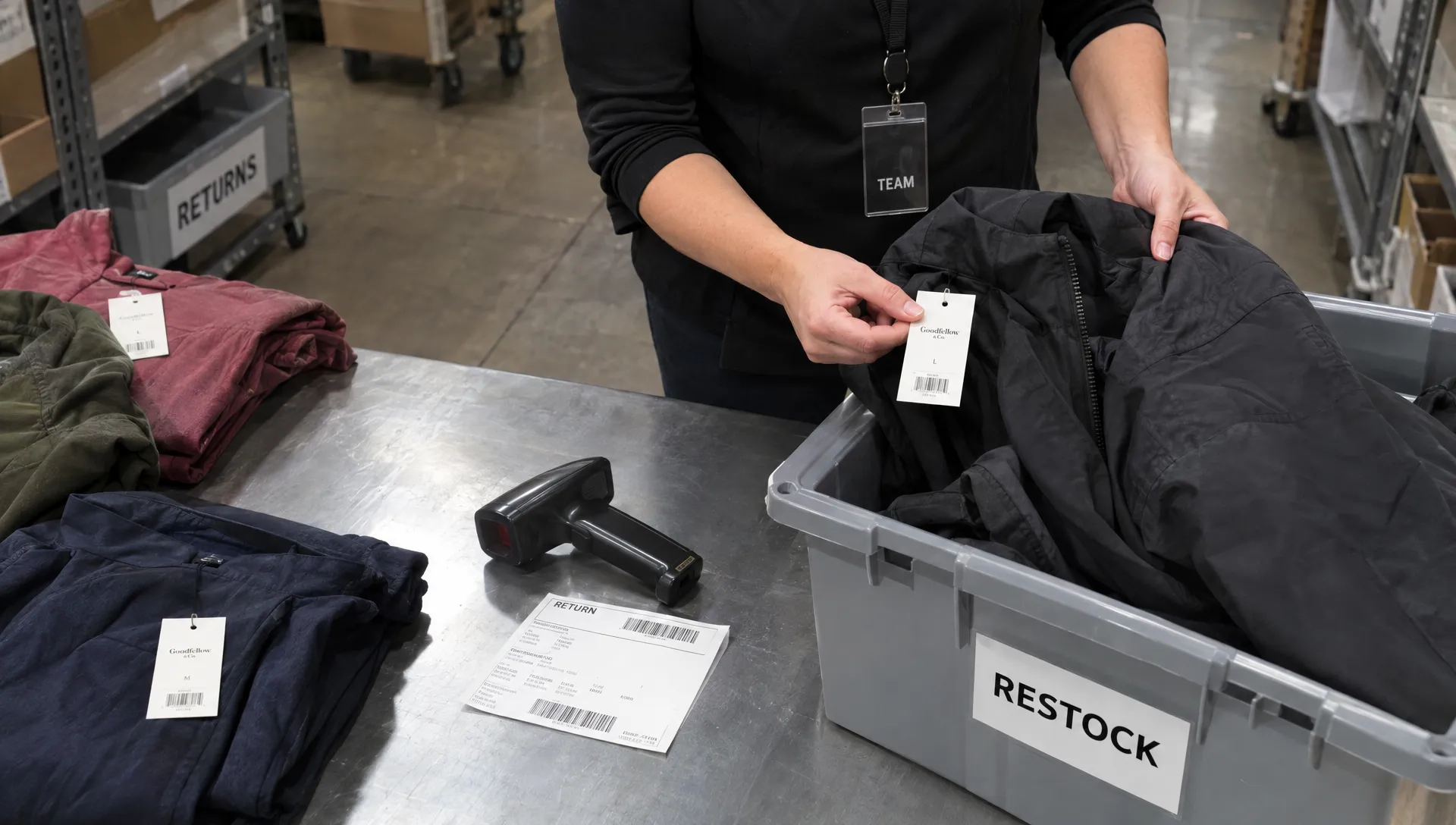
A shopper buys the last jacket online while a store associate sells the same size at the register. Both transactions appear successful, but someone will receive a cancellation. Unified commerce solutions address this problem by connecting inventory availability, order commitments and fulfillment decisions across channels.
The goal is not simply to show the same stock count everywhere. It is to make a promise the business can keep, then update that promise as products are reserved, picked, shipped, canceled or returned. For retail teams, the practical questions are where those decisions happen, which system owns each record and how exceptions get resolved.
What unified commerce actually connects
Unified commerce is an operating model in which channels use shared services and consistent rules for transactions. Websites, stores, marketplaces and customer service tools can have different interfaces while relying on the same underlying order and inventory capabilities.
That differs from an omnichannel experience built on loosely synchronized systems. A retailer may offer online shopping and store pickup yet still require employees to reconcile conflicting records. The channels exist, but the operational connection remains incomplete.
The defining feature of unified commerce solutions is shared transactional control, not necessarily a single software vendor or database. Three records must stay aligned: what physically exists, what customers have been promised and what each fulfillment location must do next.
When those records agree, a store associate can locate an online order, a customer can receive a credible pickup promise and finance can trace a refund to its original transaction. When they disagree, a polished storefront cannot prevent overselling or fulfillment confusion.
How inventory and orders move through one lifecycle
The connection becomes clearer when you follow a product from available stock through reservation, fulfillment and a possible return. Each transition changes what other shoppers can buy.
Calculate sellable inventory, not just physical stock
On-hand quantity is a physical count. Available-to-promise inventory is the quantity a retailer is prepared to commit to a customer under defined rules.
For a simple immediate-fulfillment model:
Available to promise = on-hand stock - non-sellable stock - active reservations - allocated units - safety stock
These categories must not overlap. Here, active reservations are temporary holds that have not become allocations, while allocated units belong to accepted orders awaiting shipment or handover.
Suppose a location has 10 jackets. One is damaged, two are temporarily reserved, one is allocated to an accepted order and one is held as safety stock. Five remain available to promise.
When commerce solutions calculate availability this way, they avoid treating every unit in a building as sellable. Expected supplier deliveries belong in a separate future-availability calculation, with dates and confidence rules, rather than silently inflating stock available today.
Availability also depends on fulfillment eligibility. A unit in a store without packing capacity might be available for pickup but unavailable for shipping. The inventory number needs location and service context to support an honest customer promise.
Reserve stock before making a firm commitment
Displaying availability does not secure inventory. The critical step is a reservation operation that prevents concurrent buyers from claiming the same unit.
The authoritative reservation service should check availability and create the hold as one concurrency-controlled operation. A storefront cache can support browsing, but it should not independently authorize the final stock commitment.
Reservations also need explicit lifetimes. A checkout hold might expire if the shopper abandons payment. An accepted order should move into a longer-lived commitment without subtracting the same unit twice.
Reliable commerce solutions coordinate this transition with payment authorization. There is no universally correct sequence for every payment method, but failure handling must be defined: release stock if payment fails, and void or otherwise resolve an authorization if the order cannot be accepted.
Order routing then chooses an eligible location using stock, delivery promises, labor capacity and fulfillment cost. Distributed order management can support these decisions, but the rules require operational input. Shipping from the nearest store is not automatically cheapest if it creates split shipments or overloads an understaffed location.
Close shipments, cancellations and returns correctly
When an item ships, its physical on-hand quantity falls and its allocation closes. Because both changes represent the same unit leaving the operation, they must not create another reduction in sellable availability.
Cancellations have a different effect. A pre-pick cancellation may release the commitment immediately. An order already packed or handed to a carrier may need an interception or return workflow instead. Changing its status to “canceled” does not make the merchandise physically available.
Returns introduce another distinction: financial resolution is not inventory disposition. A refund can be approved before the item is inspected, and a returned product might need cleaning, repair or quarantine.
Without these distinctions, commerce solutions can return damaged merchandise to sellable stock or leave canceled orders holding units indefinitely. Model order status, payment status and inventory status separately, with explicit rules connecting them.
This precision also helps customer service. An agent should be able to explain whether an order is awaiting payment, reserved, being picked or already shipped rather than relying on a single ambiguous “processing” label.
Assign ownership before connecting systems
Unification does not mean allowing every application to update every record. It requires clear ownership of each business fact, including how corrections reach other systems.
A warehouse management system may own physical warehouse movements, while store systems report sales and adjustments. A shared inventory service can combine those inputs into availability. The exact assignment varies by retailer.
For commerce solutions to remain consistent, ownership should be defined at the field and transition level, not merely by declaring an entire application the “source of truth.”
| Capability | Typical responsibility | Critical handoff |
|---|---|---|
| ERP | Procurement, financial records and selected master data | Receives reconciled sales and inventory movements |
| Warehouse management | Receiving, picking, packing and warehouse stock movements | Reports physical changes and fulfillment progress |
| Point of sale | Store transactions and store-level stock events | Shares sales, returns and adjustments |
| Order management | Order lifecycle, allocation and routing | Issues fulfillment requests and tracks outcomes |
| Inventory service | Consolidated availability and reservation enforcement | Publishes sellable quantities and commitment changes |
This is an illustrative allocation, not a mandatory architecture. Some platforms combine several responsibilities.
Document the boundaries before implementation. Retailers with unusual approval, allocation or returns requirements can use those workflows to scope integrations, as discussed in planning custom Magento development around complex retail workflows.
Design integrations for delays, duplicates and outages
An event-driven connection lets a stock movement or order transition notify other systems without waiting for a scheduled batch. It does not guarantee that every consumer sees every update instantly or in the same order.
Well-designed commerce solutions therefore need idempotent processing: receiving the same shipment event twice must not deduct stock twice. Event identifiers, entity versions and durable processing records help enforce this behavior.
Integration contracts should also address out-of-order events. An older availability update must not overwrite a newer balance. Failed messages need monitored retries and a recovery queue that someone actually owns.
Reconciliation remains necessary even with reliable messaging. Compare authoritative records with downstream projections, investigate mismatches and provide controlled replay or correction procedures. A successful API response alone does not prove the entire workflow completed.
Set freshness targets by business risk. Product listings can tolerate different delays than checkout reservations. Track update latency at high percentiles, not only averages, because peak-period delays often create the most expensive exceptions.
During an outage, define which promises remain safe. A store might continue selected transactions under an offline policy, while online checkout temporarily restricts uncertain inventory. Safety stock can reduce exposure, but it cannot repair an unavailable reservation authority.
Choose commerce solutions by operating model
The right architecture depends on how inventory is shared and how orders are fulfilled. A small direct-to-consumer retailer with one warehouse faces different constraints from a chain offering pickup, ship-from-store and cross-channel returns.
Three common patterns are worth evaluating:
| Pattern | Potential fit | Main evaluation concern |
|---|---|---|
| Integrated commerce suite | Teams seeking more capabilities within one platform family | Whether shared workflows support actual store and fulfillment requirements |
| OMS-led connection | Retailers coordinating several channels and fulfillment locations | Reservation ownership and integration quality across existing systems |
| Composable architecture | Organizations needing independently replaceable capabilities | Engineering capacity, observability and operating cost |
These are architectural options, not automatic maturity levels. A composable stack can still contain fragmented inventory, and an integrated suite can still need substantial external connections. The composable versus monolithic commerce decision guide examines the broader trade-offs.
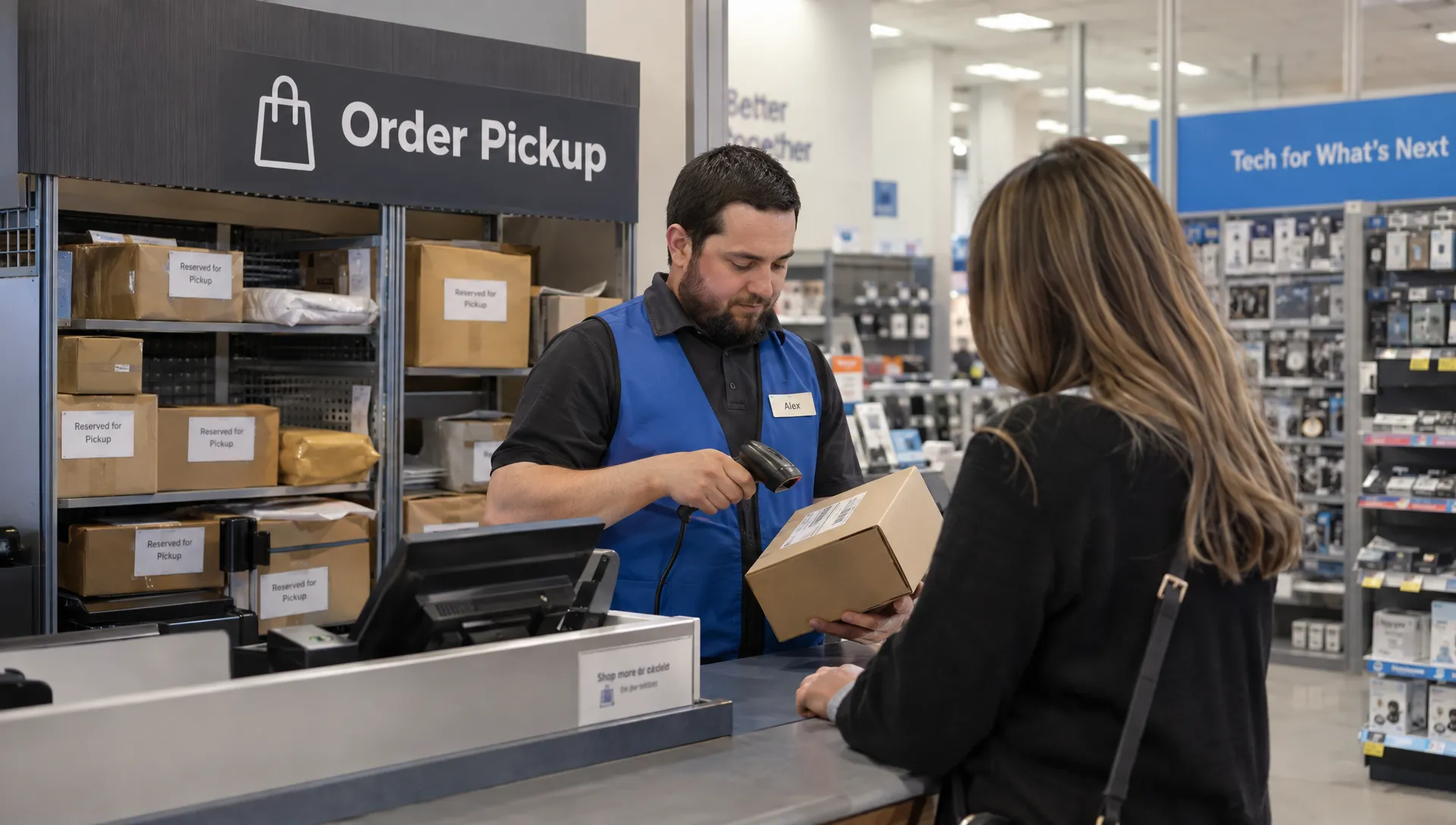
Business model adds further requirements. B2B orders may need credit checks, scheduled delivery and partial releases. Marketplaces introduce external acknowledgment timing. Store pickup requires location-specific promises and staff confirmation procedures.
Evaluate these workflows before comparing feature lists. Otherwise, a platform may demonstrate a clean checkout while leaving the difficult inventory decisions to spreadsheets and manual intervention.
Connect customer context without confusing data ownership
Inventory and order coordination answers what can be sold and how it will be fulfilled. Customer data answers a different set of questions: who is interacting, what permissions apply and which experience is relevant.
A customer data platform can connect identities and preferences across channels, but it should not become the authority for stock reservations. Similarly, an inventory service should not decide whether a shopper has consented to marketing.
The retail personalization engagement built around a consent-aware customer data platform illustrates how identity resolution, preference management and controlled experiments can support a shared customer view. That capability complements operational unification rather than replacing it.
Keep the boundary explicit. Personalization may use approved signals to recommend relevant products, while transactional availability determines whether those products can actually be promised. Revalidate stock before commitment instead of assuming a recommendation feed is current.
Apply data minimization across integrations. A warehouse usually needs fulfillment details, not a complete marketing profile. Access controls and retention rules should follow the purpose of each system.
Evaluate vendors using difficult scenarios and full operating cost
When comparing commerce solutions, ask vendors to demonstrate complete transactions against representative data. A feature labeled “real-time inventory” means little without an explanation of reservation authority, update latency and recovery behavior.
Useful evaluation scenarios include:
- Two channels attempt to purchase the final unit simultaneously.
- Payment succeeds, but order creation times out before the caller receives confirmation.
- A store rejects a fulfillment request after discovering missing stock.
- A partial return includes one resellable item and one damaged item.
Ask the vendor to show records, customer messages and recovery steps, not just the successful interface. Include store operations, finance, customer service and engineering in the review.
Compare total cost of ownership across licenses, transaction charges, implementation, integration maintenance, monitoring, support and internal staffing. Include migration, data exports and eventual replacement costs. A lower subscription price can conceal expensive manual reconciliation.
Security and usability belong in the same assessment. Check role-based permissions for refunds and stock adjustments, audit trails, accessible employee workflows and customer-facing order tracking. Payment architecture should be reviewed against the applicable PCI DSS requirements, including responsibilities that remain with the retailer.
Finally, test portability. Confirm how to export orders, inventory movements, reservation history and configuration in usable formats. Data access and documented integration contracts reduce the cost of changing providers later.
Implement in phases without creating two authorities
A controlled rollout is safer than replacing every channel simultaneously, but phased delivery introduces its own risk: old and new systems can both believe they own the same inventory commitment.
Pilot a complete workflow, not an isolated connector
Start with a bounded scope, such as one warehouse and a small store group. Document SKU and variant identifiers, location codes, stock statuses and order-state mappings before moving live traffic.
A migration to unified commerce solutions should establish baseline balances and explain outstanding commitments. Open orders, active reservations, in-transit stock and unprocessed returns need explicit treatment. Importing a stock snapshot without those obligations can overstate availability immediately.
Use shadow calculations to compare the new availability model with existing records before it controls customer promises. Investigate differences rather than assuming either system is correct.
At cutover, specify the authoritative writer for every affected transition. Avoid a period in which both platforms independently reserve against the same stock. Rehearse rollback, including how orders accepted during the pilot would be preserved or transferred.
Test failure paths under realistic load: duplicate payment notifications, delayed shipment events, expired reservations and location outages. Train store teams on exception handling and escalation, not just the normal pickup flow. A technically correct process will still fail if employees cannot resolve missing merchandise.
Measure promise reliability and exception cost
Evaluate commerce solutions against a baseline that covers operational outcomes, not only storefront conversion. Define each metric carefully so that changes reflect performance rather than different counting rules.
Inventory accuracy compares recorded quantities with verified physical counts. Track discrepancies by location and product to reveal concentrated problems.
Inventory-related cancellation rate measures accepted orders canceled because stock could not be fulfilled. Separate it from fraud rejection and customer-requested cancellations.
Promise accuracy measures whether pickup readiness or delivery commitments were met. Review it alongside split-shipment rate and fulfillment cost per order so that speed is not improved at an unsustainable cost.
Exception workload captures manual interventions, unresolved messages and staff time spent correcting records. Pair it with reservation failures and stock-update latency to identify causes rather than just symptoms.
AI-assisted forecasting or anomaly detection can support investigation, but it should not conceal unclear ownership. Fix the underlying transaction rules before adding another prediction layer.
Frequently asked questions
Is unified commerce the same as omnichannel retail? Not exactly. Omnichannel describes connected shopping experiences across channels. Unified commerce emphasizes the shared transactional services and operational records that make those experiences dependable. An omnichannel offer can still rely on fragmented back-office processes.
Can existing commerce solutions support unified inventory without a full replatform? Sometimes. A shared inventory service or order management layer may connect existing channels. Feasibility depends on API access, reservation controls, data quality and the ability to establish clear ownership without conflicting writes.
Does unified commerce require one database? No. Multiple systems can cooperate through shared contracts and controlled responsibilities. The essential requirement is authoritative decision-making for commitments, plus reliable propagation and reconciliation, rather than storing every record in one physical database.
How close to real time does inventory need to be? It depends on sales velocity and overselling risk. Browsing availability can use a cached view, but the final commitment needs an authoritative availability check and concurrency control. Define measurable freshness targets instead of accepting an undefined “real-time” claim.
Start with the promise your systems must keep
Before selecting technology, trace one order across checkout, reservation, fulfillment and return. Identify every place a person must reconcile records or guess which status is correct. Those gaps make a practical improvement backlog.
Space Dinosaurs combines retail-focused engineering, UX design, performance optimization and analytics. For a modernization initiative, start by defining inventory ownership, exception workflows and measurable customer promises so the implementation addresses operational causes, not just visible symptoms.