

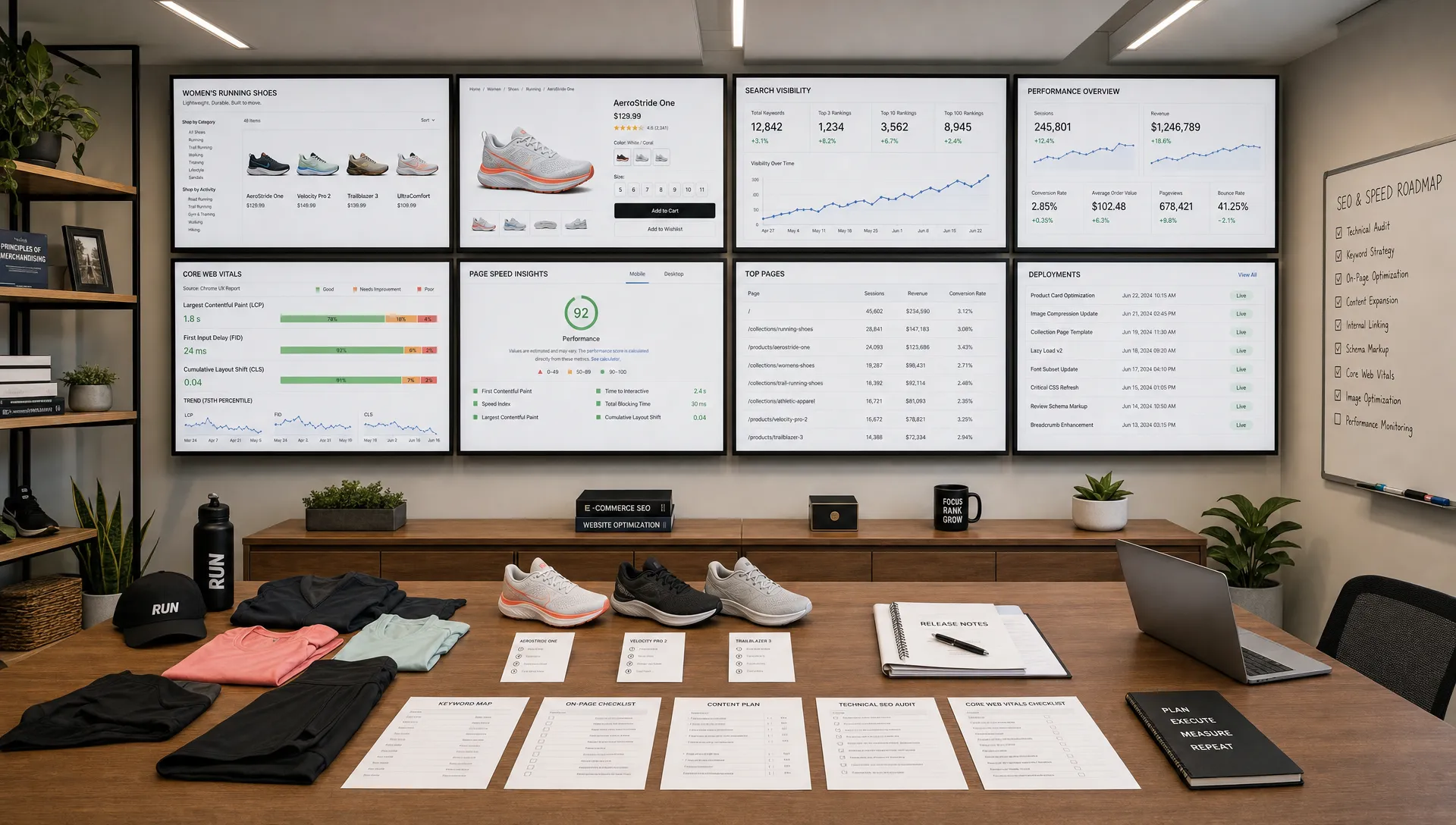
For ecommerce teams, the shorthand seo website speed points to a bigger reality: organic growth, shopper experience and revenue protection now depend on the same technical foundation. A page can have the right keywords, strong product data and compelling merchandising, but if it loads slowly or shifts under a shopper’s thumb, search visibility and conversion both suffer.
This does not mean speed is a replacement for relevance. Ecommerce SEO still needs clean architecture, useful category pages, indexable product content and internal links that help shoppers move naturally through the catalog. Website speed makes those assets easier for search engines to process and easier for customers to use.
The most effective retail teams treat performance as a shared responsibility across SEO, engineering, UX, merchandising and analytics. That is where speed stops being a score in a tool and becomes part of how the storefront grows.
Why seo website speed is a retail growth lever
Search engines want to send users to pages that answer intent well. In ecommerce, that answer might be a category page with helpful filters, a product page with complete specifications or a buying guide that links shoppers toward the right collection. If those pages are slow, unstable or difficult to interact with on mobile, the experience weakens even when the content is relevant.
Core Web Vitals do not make thin pages rank simply because they are fast. They do, however, support the broader page experience signals that help search engines understand whether a result is usable. For retailers competing in crowded categories, usability can become the difference between a page that earns traffic and a page that leaks opportunity.
Speed also changes user behavior after the click. Faster pages reduce friction in browsing, comparison and checkout. That creates more sessions where organic visitors view products, add to cart and purchase rather than returning to search results.
The technical path: crawl, render and index faster pages
Ecommerce sites often have large catalogs, faceted navigation, seasonal landing pages and JavaScript-heavy interfaces. Those choices can be valuable for shoppers, but they add complexity for search engines. Slow server responses, bloated scripts and inconsistent rendering can make it harder for crawlers to access the content that matters.
A mature seo website speed program treats performance as part of technical SEO, not a separate engineering cleanup. The goal is to shorten the path from URL discovery to useful, indexable content. That usually means improving server response, reducing unnecessary JavaScript, prioritizing critical content and making sure templates render cleanly on mobile.
| Search engine need | Speed-related issue | Ecommerce symptom | Better approach |
|---|---|---|---|
| Discover URLs efficiently | Slow responses across many pages | Important products are crawled less often | Improve hosting, caching and sitemap hygiene |
| Render meaningful content | Heavy client-side JavaScript | Category copy or products appear late | Server-render critical content where possible |
| Understand page purpose | Delayed or hidden main content | Weak signals on product and category pages | Prioritize headings, product data and internal links |
| Revisit changing pages | Unstable performance at scale | Fresh inventory updates lag in search | Optimize high-change templates first |
The shopper path: faster pages turn visibility into revenue
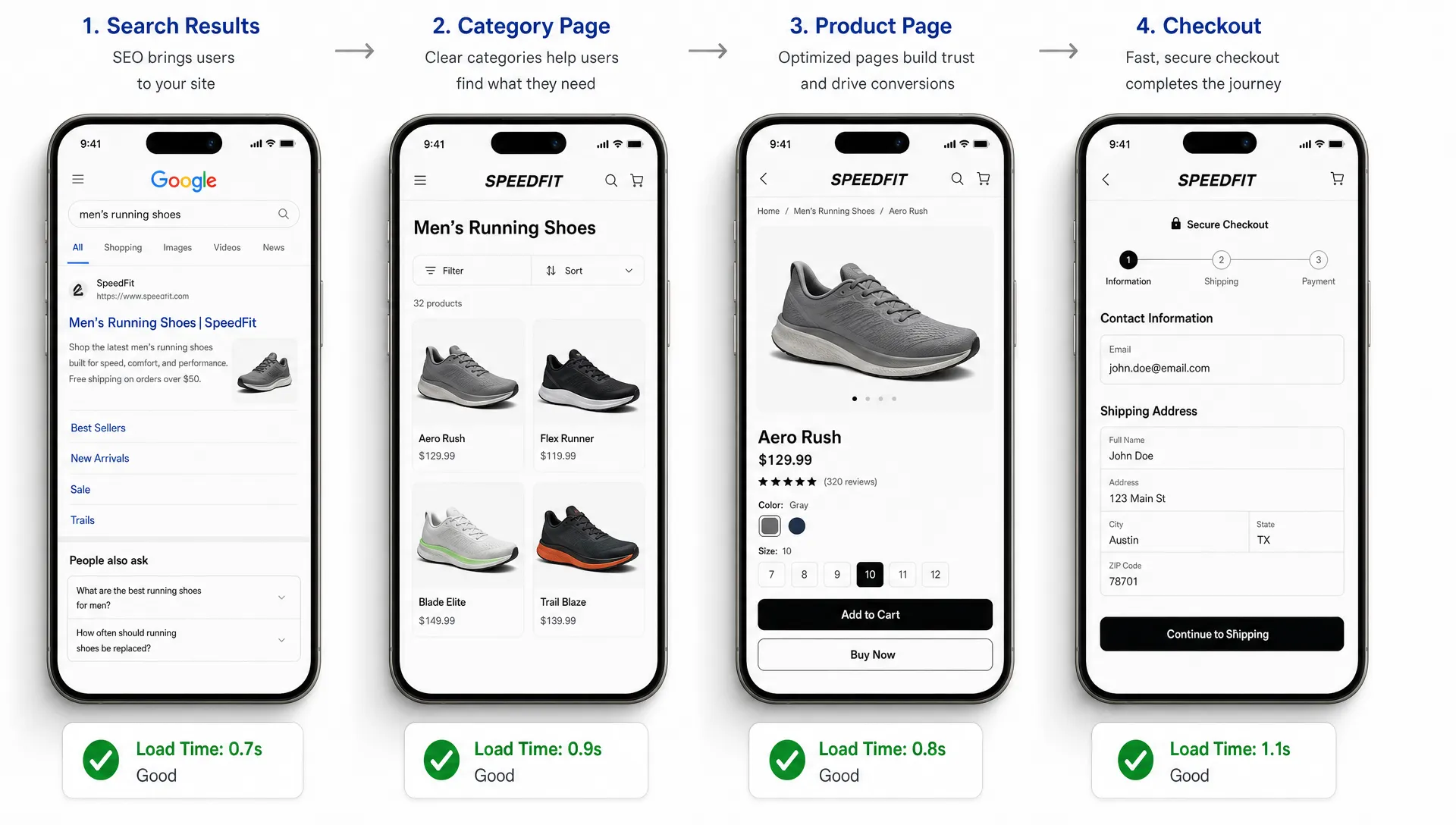
SEO can bring a qualified shopper to the storefront, but speed influences what happens next. A mobile visitor comparing running shoes, furniture or skincare products may open several tabs, apply filters and move between product pages quickly. If each interaction feels slow, the session becomes work.
This is where seo website speed stops being an SEO task and becomes revenue protection. Slow category pages reduce product discovery. Slow product pages reduce confidence. Slow carts create hesitation at the moment when the shopper is closest to buying.
Retail leaders should connect performance data to commercial behavior rather than looking at speed in isolation. Space Dinosaurs covers that connection in more detail in its guide to how ecommerce teams can turn site speed into revenue, which is the practical lens teams need when prioritizing fixes.
Core Web Vitals connect SEO language to engineering work
Core Web Vitals are useful because they translate vague complaints like “the site feels slow” into measurable user experience signals. For ecommerce teams, they also create a common language between SEO specialists, developers and business owners.
In a practical seo website speed roadmap, each metric should map to a shopper problem and an engineering action. LCP often points to oversized hero images, slow product media or weak caching. INP points to delayed interactions caused by JavaScript. CLS points to elements shifting as banners, images, reviews or product recommendations load.
| Metric | What it reflects | Common ecommerce cause | Useful fix direction |
|---|---|---|---|
| LCP | How quickly the main content loads | Large images, slow servers or render-blocking code | Compress media, cache pages and prioritize above-the-fold content |
| INP | How responsive interactions feel | Heavy scripts, tag overload or complex filters | Reduce JavaScript, defer noncritical tags and simplify interactions |
| CLS | How visually stable the page is | Late-loading banners, images or reviews | Reserve space and control layout shifts |
| TTFB | How quickly the server responds | Platform latency, weak caching or backend bottlenecks | Improve infrastructure, caching and API response times |
For teams building baseline reports, this guide to using Google PageSpeed Insights to accelerate your site for SEO is a useful primer on interpreting performance, accessibility, best practice and SEO signals in one place.
Where speed and ecommerce SEO collide most often
The same features that make a retail storefront persuasive can also slow it down. The issue is not that brands should remove rich merchandising, personalization or third-party tools. The issue is that every feature needs to earn its place in the buying journey.
Common friction points include:
- Large product images that are not compressed or served in modern formats
- Carousels, personalization scripts and recommendation widgets that load before critical content
- Filter systems that create crawl traps or delay category-page rendering
- Review platforms, chat tools and analytics tags that compete for main-thread time
- Promotional banners that shift layouts on mobile after the page begins loading
A balanced seo website speed approach does not strip the storefront down to a bare catalog. It protects the parts of the experience that drive trust and conversion while removing, delaying or rebuilding the parts that create friction without measurable upside.
How to prioritize fixes without making speed an endless project
Performance work can become a backlog with no finish line. Ecommerce teams avoid that by starting with templates that have both search demand and commercial value. In most retail businesses, that means category pages, product detail pages, search results pages, cart and checkout.
The most useful seo website speed work is sequenced by expected business impact. A fix on a high-traffic category template can affect thousands of URLs. A fix on product image handling can improve organic landing pages, paid traffic pages and merchandising pages at the same time.
Prioritization should also consider mobile field data, not only lab tests. Lab tools help teams diagnose issues in a controlled setting, but real shoppers use different devices, networks and browsers. Field data shows whether the storefront feels fast for actual users.
This is also where SEO and development roadmaps should merge. If the SEO team is planning a category architecture update, the engineering team can improve template performance at the same time. If merchandising is adding richer media, performance budgets can define how those assets load without hurting the journey.
A practical measurement model for retail teams
Speed reporting becomes more persuasive when it connects technical metrics to search and revenue outcomes. Instead of asking whether the site is “fast enough,” ask which slow templates are limiting organic sessions, product views, add-to-cart actions or completed orders.
A strong seo website speed dashboard combines SEO data, UX data and commercial data. It should help the team decide what to fix next, not simply record whether a tool score improved.
| Metric type | Example source | What it tells the team | Decision it supports |
|---|---|---|---|
| Search visibility | Google Search Console | Which pages earn impressions and clicks | Which templates deserve SEO priority |
| Page experience | Core Web Vitals field data | How real users experience key pages | Which performance issues affect shoppers |
| Behavior | Analytics events | Where visitors browse, hesitate or exit | Which journeys need UX or speed fixes |
| Revenue | Ecommerce tracking | Which pages influence orders and value | Which work should move first in the roadmap |
For a broader view of how organic work should be judged, Space Dinosaurs’ perspective on what actually moves revenue in ecommerce SEO pairs well with performance reporting.
FAQ
Does website speed directly improve ecommerce SEO? Website speed is part of the page experience search engines can evaluate, but it works best alongside relevance, content quality, clean architecture and strong internal linking. A faster weak page is still weak, but a fast useful page has a better chance to perform.
Which ecommerce pages should be optimized first? Start with templates that affect the most revenue and search demand, usually category pages, product pages, cart and checkout. Improving a template often improves many URLs at once, which makes the work more efficient.
How often should retail teams review speed and SEO together? Review them whenever major releases, merchandising changes or third-party tools are added. For active ecommerce teams, a monthly review of Core Web Vitals, search visibility and conversion metrics is a practical rhythm.
Can AI features or personalization hurt performance? They can if they add heavy scripts, slow APIs or late-loading layout changes. A good seo website speed plan can still support AI-driven retail experiences, but those experiences need performance budgets and careful measurement.
Build a faster, more searchable storefront
SEO and speed should not compete for roadmap space. They work best when retail teams use the same evidence to improve discoverability, usability and commercial outcomes.
Space Dinosaurs helps retail brands modernize ecommerce experiences with AI-enabled engineering, performance optimization, UX design, analytics and ongoing improvement. If your storefront needs to rank better and feel faster for real shoppers, the right next step is to connect those goals in one operating model.