
Growth in ecommerce is often treated as a marketing problem. More traffic, more ads, more campaigns, more promotions. Those matter, but they only create lasting growth when the website can absorb demand without slowing down, confusing shoppers or creating operational drag behind the scenes.
That is where ecommerce web development services become a growth lever rather than a technical expense. A strong development partner does more than build pages. It improves how the store performs, how quickly teams can launch new ideas, how well data flows through the business and how confidently customers can move from discovery to checkout.
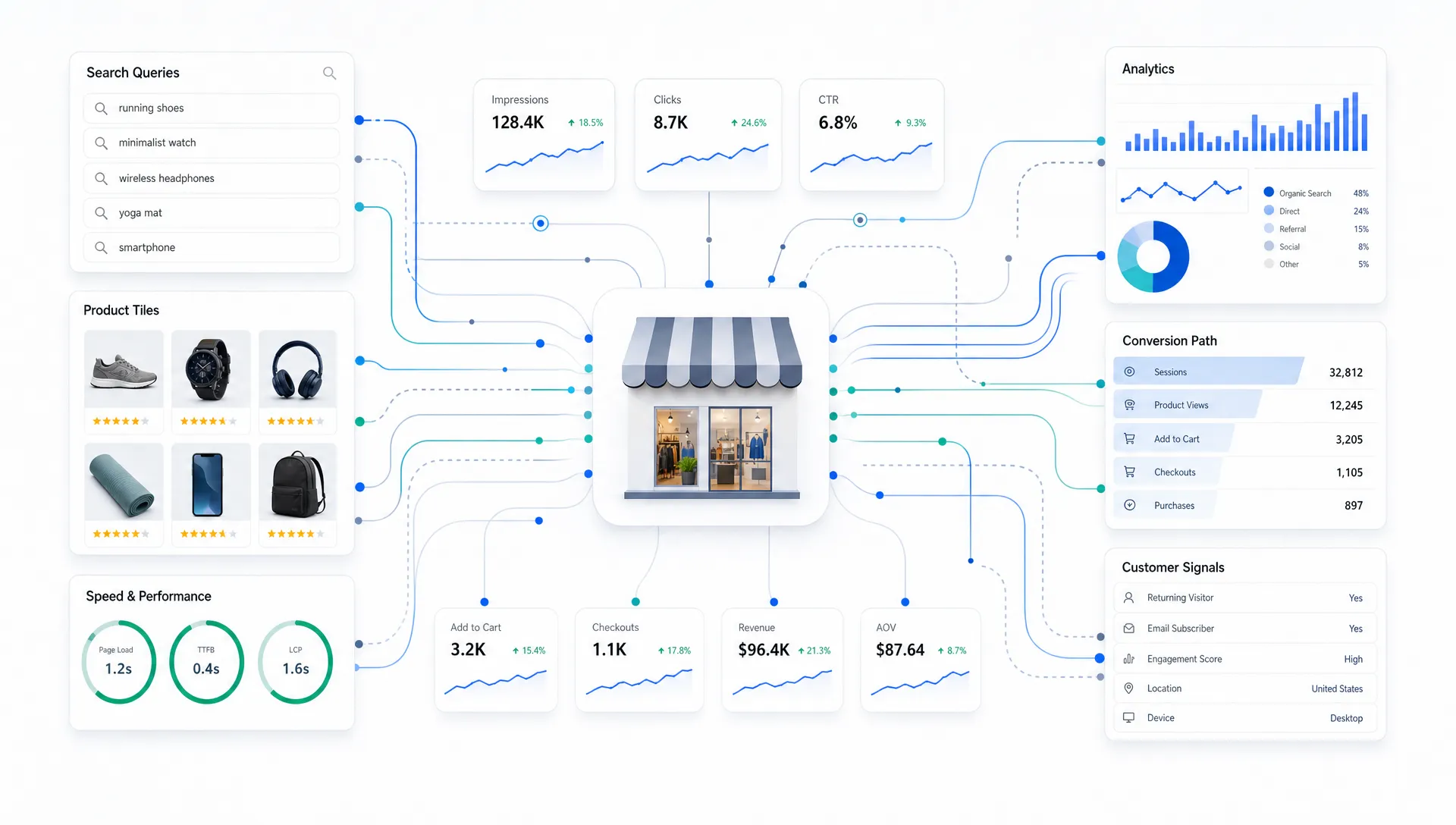
For retail brands, the website is no longer just a storefront. It is a sales channel, content engine, analytics system, customer service layer and operational interface. If any part of that system is brittle, growth becomes harder than it needs to be.
Growth depends on more than a visually polished store
A beautiful ecommerce site can still limit revenue if it loads slowly, buries high-intent products, breaks during campaign peaks or forces teams to rely on manual workarounds. Development quality shapes the customer experience in ways shoppers may never consciously notice, but they feel the friction immediately.
A growth-ready ecommerce site should support:
- Fast mobile browsing during paid, organic and email-driven traffic spikes
- Clear product discovery through search, navigation, filters and merchandising logic
- Reliable checkout flows that minimize avoidable abandonment
- Clean integrations with inventory, product data, order management and analytics tools
- Practical content and merchandising workflows for non-technical teams
- Stable releases, maintainable code and fewer emergency fixes
When those foundations are weak, growth becomes expensive. Marketing teams pay for traffic that does not convert. Operations teams patch gaps manually. Developers spend too much time fixing regressions instead of improving the customer journey.
How ecommerce web development services connect to revenue
The best ecommerce development work ties technical decisions to commercial outcomes. It does not ask whether a feature can be built in isolation. It asks what the feature should improve, how that improvement will be measured and whether it will remain maintainable as the business scales.
| Growth lever | What development improves | Commercial impact |
|---|---|---|
| Site speed | Front-end performance, image handling, code quality, hosting patterns | Better conversion potential, lower bounce rates and stronger mobile experiences |
| Product discovery | Search, filters, navigation, category logic and merchandising flexibility | More shoppers reach relevant products faster |
| Checkout reliability | Payment flows, validation, error handling and third-party integrations | Fewer lost orders from avoidable friction |
| Operational scale | ERP, PIM, OMS, CRM, analytics and fulfilment connections | Less manual work and fewer data mismatches |
| Experimentation | Tracking, release workflows and modular design systems | Faster learning cycles and more confident decisions |
| Maintainability | Clean architecture, documentation, QA and technical debt control | Lower long-term cost and fewer disruptive fixes |
This is why development should sit close to revenue strategy. If the commercial goal is to improve repeat purchases, the technical roadmap may prioritize account UX, reorder flows, personalized recommendations or email platform integrations. If the goal is to expand into more categories, product data structure and taxonomy become more important than homepage redesigns.
Performance turns attention into action
Every ecommerce team knows speed matters, but many still treat performance as a one-time launch checklist. In practice, speed is a continuous discipline. New apps, tracking scripts, media assets, personalization tools and campaign landing pages can all degrade performance over time.
Ecommerce web development services support growth by protecting the browsing experience as the store becomes more complex. That includes optimizing Core Web Vitals, reducing unnecessary JavaScript, improving image delivery, managing app bloat and building pages that work well on real mobile connections.
The revenue case is straightforward. Shoppers are impatient, especially on mobile. If category pages, product pages or checkout steps hesitate, a portion of demand disappears before it can become revenue. Search visibility can also suffer when technical performance declines.
A development partner should be able to connect performance work to the customer journey. The goal is not simply a better score in a testing tool. The goal is to make key revenue paths faster, from landing page to product detail page to cart to payment confirmation. Space Dinosaurs explores this connection in more depth in its guide to how ecommerce teams can turn site speed into revenue.
UX development reduces friction at the moments that matter
Growth rarely comes from one dramatic change. More often, it comes from removing dozens of small sources of friction across the shopping journey.
A customer may not complain about weak filters, vague size guidance, an unhelpful empty search result or a confusing shipping message. They simply leave. Development services support growth by translating UX insight into working, reliable improvements.
For retail brands, high-impact UX development often includes better category templates, clearer product information architecture, more useful cart behavior, simplified checkout steps and stronger mobile interactions. It can also include accessibility improvements that make the site easier to use for more customers.
Human-centered UX design is especially important because ecommerce teams often see the store from the inside. Customers arrive with less context, less patience and many alternatives. Good development closes that gap by making the next step obvious without overloading the interface.
Integrations keep growth from becoming operational chaos
As order volume increases, the website has to work in sync with the rest of the business. Product availability, promotions, customer records, fulfilment data and returns information need to move accurately between systems.
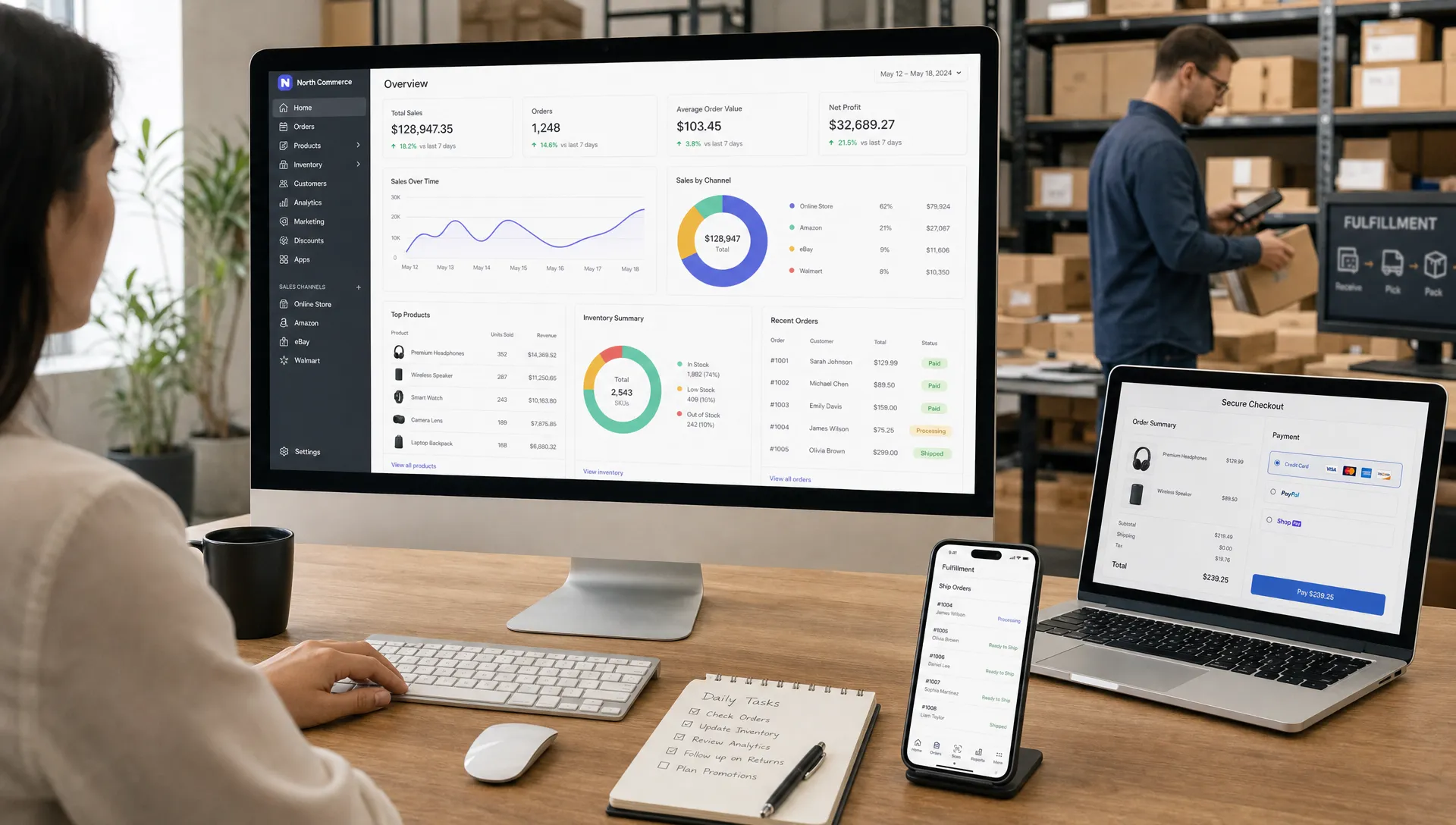
This is where development moves beyond the visible storefront. Strong ecommerce web development services help brands connect commerce platforms with tools such as product information management systems, order management systems, ERPs, CRMs, analytics platforms and customer support tools. These integrations reduce manual work and help teams trust the data they use to make decisions.
Operational alignment matters because customer experience does not end at checkout. Fast dispatch, accurate stock data and reliable delivery communication are part of the brand promise. For teams assessing the operational side of scaling, this guide on how eCommerce fulfilment services support faster growth is a useful companion to platform planning because fulfilment constraints often shape what the ecommerce site needs to integrate and display.
When integrations are poorly designed, growth creates more exceptions. Stock levels drift. Customer service teams receive avoidable tickets. Finance teams reconcile mismatched records. Marketers hesitate to launch promotions because the platform cannot support the operational complexity. Good development reduces those constraints before they become expensive.
Better data makes growth less speculative
Ecommerce growth depends on decisions, and decisions depend on trustworthy data. Development has a direct role in making that data useful.
Analytics work is not just dropping a tag into the site header. It includes defining events correctly, tracking the right steps in the customer journey, separating technical errors from user behavior and making sure reporting remains stable after site changes. Without that discipline, teams can spend weeks debating performance with incomplete or misleading data.
A development partner can help ecommerce teams answer practical questions such as:
- Which pages create the biggest drop-off before add to cart?
- Are shoppers using search successfully or refining repeatedly without results?
- Do payment errors spike for a specific method, browser or region?
- Which merchandising changes improve revenue per session, not just clicks?
- Are performance issues worse on real mobile devices than lab testing suggests?
This kind of measurement turns optimization into a repeatable process. It also prevents teams from prioritizing work based only on opinions, competitor mimicry or the loudest stakeholder in the room.
Scalable architecture gives teams room to move
A site that supports today’s business may still hold back tomorrow’s growth. New categories, international expansion, B2B selling, subscriptions, loyalty experiences, personalization and AI-enabled shopping journeys can all place new demands on the platform.
Scalable development does not mean overengineering every project. It means making architecture choices that preserve flexibility. For some brands, that may involve improving an existing platform rather than replacing it. For others, it may mean moving toward a composable stack where specific services can evolve independently.
The right choice depends on the business model, team maturity, budget, growth stage and operational complexity. What matters is that development decisions account for future change. A low-cost shortcut can become expensive if it blocks merchandising workflows, slows releases or makes every new feature fragile.
A maintainable architecture usually includes clear ownership, reusable components, sensible documentation, automated testing where appropriate and disciplined release processes. These details are not glamorous, but they protect momentum.
AI-driven retail experiences need strong foundations
AI is becoming part of ecommerce, from product recommendations and conversational commerce to customer segmentation and content support. But AI does not fix weak foundations. It amplifies whatever data, architecture and customer experience already exist.
If product data is inconsistent, AI-assisted discovery may give poor results. If analytics events are unreliable, personalization logic may optimize toward the wrong signals. If the site is slow, adding another layer of dynamic experience can make performance worse.
Ecommerce web development services support AI-driven retail growth by preparing the underlying systems. That may include cleaning product data structures, improving event tracking, designing modular customer experience components and integrating AI features in ways that do not compromise stability or speed.
For most brands, the winning approach is practical. Use AI where it improves customer usefulness or team efficiency, then measure the impact with the same discipline used for any other feature.
What strong ecommerce web development services typically include
The scope of development support varies by retailer, but a growth-focused engagement should connect strategy, implementation and ongoing optimization. A team that only takes tickets may help with output, yet still miss the larger growth opportunity.
A strong partner usually brings together commercial understanding, UX thinking, technical execution, QA, analytics and post-launch improvement. Space Dinosaurs has a separate guide on what to expect from an ecommerce development company, but the key idea is simple: development should make the business easier to grow, not just the website easier to change.
| Service area | Why it matters for growth |
|---|---|
| Discovery and technical audit | Finds bottlenecks before teams invest in the wrong work |
| UX and journey improvement | Helps more visitors reach relevant products and complete purchases |
| Front-end and back-end development | Turns ideas into stable, usable features |
| Performance optimization | Protects speed as the site gains traffic, content and functionality |
| Integration work | Keeps product, order, customer and analytics data aligned |
| QA and release management | Reduces launch risk and protects revenue during changes |
| Continuous optimization | Builds compounding gains through regular improvements |
The strongest services also consider internal workflows. If marketers cannot update landing pages quickly or merchandisers cannot manage categories without developer help, the site slows the business down. Growth depends on empowering internal teams as much as serving customers.
Signs your current ecommerce site is limiting growth
Sometimes the need for better development support is obvious, such as a failed checkout or a site crash during peak trading. More often, the symptoms are quieter.
Watch for patterns like rising traffic without matching revenue growth, slow page templates, frequent bugs after minor changes, product data inconsistencies, poor mobile conversion, manual order handling, unreliable analytics or long delays for simple content updates.
These issues often point to the same underlying problem: the site has outgrown its technical foundations. More marketing spend may hide the issue for a while, but it will not solve it. Development work becomes the path to removing constraints so that demand can convert more efficiently.
How to make development work compound over time
The most effective ecommerce teams do not treat development as a project that ends at launch. They build a cycle of improvement. Identify the constraint, prioritize based on impact, ship the change, measure the result and repeat.
This approach is especially useful for retail because customer behavior, channel economics and platform requirements keep changing. A store that performed well last year may now carry more scripts, more content, more integrations and more operational complexity. Without ongoing attention, performance slowly decays.
To make development compound, align the roadmap around commercial priorities. That might mean conversion rate, average order value, repeat purchase rate, organic visibility, checkout completion, operational efficiency or site stability. The metric should guide the work, not sit in a report after the work is done.
For brands that need consistent momentum rather than occasional bursts of activity, Space Dinosaurs offers Momentum for ecommerce website growth and optimization, which is designed around continuous discovery, prioritization and improvement.
FAQ
What are ecommerce web development services? Ecommerce web development services include the strategy, design implementation, coding, integrations, testing, performance work and ongoing optimization needed to build and improve an online store.
How do ecommerce web development services support growth? They support growth by improving site speed, conversion paths, product discovery, checkout reliability, system integrations, analytics quality and long-term maintainability.
Is ecommerce development only needed for a redesign? No. Many high-value improvements happen after launch, such as performance optimization, checkout fixes, analytics improvements, integration upgrades and UX changes based on customer behavior.
How should a retail brand measure development impact? Useful measures include conversion rate, revenue per session, checkout completion, Core Web Vitals, search usage, product page engagement, error rates, release stability and operational time saved.
When should a brand consider a new development partner? Consider new support when technical changes take too long, bugs are frequent, analytics cannot be trusted, site speed is declining or growth plans are blocked by platform limitations.
Build an ecommerce foundation that can scale
Growth is easier when the website, data, operations and customer experience are working together. Ecommerce web development services give retail brands the technical foundation to move faster, convert more demand and reduce the hidden friction that slows teams down.
Space Dinosaurs helps retail brands modernize ecommerce experiences through AI-enabled engineering, UX design, performance optimization, analytics and ongoing improvement. If your site is becoming harder to grow, the next step is not simply another redesign. It is building a stronger system for continuous ecommerce performance.