

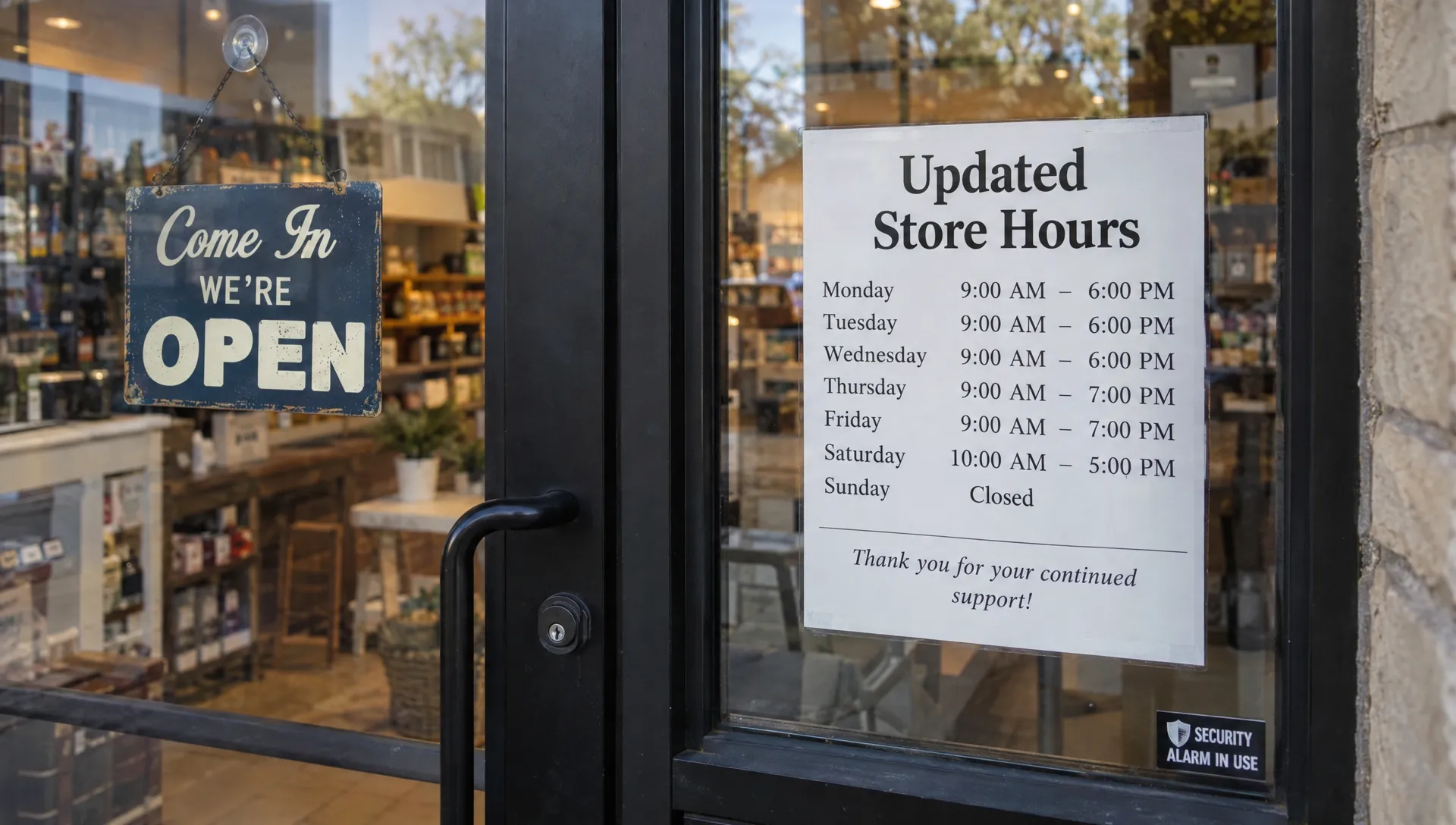
Choosing a retail SEO agency means deciding who will help shoppers find the right product, the right store or both. A partner can improve ecommerce rankings yet overlook inaccurate store hours, weak location pages or inventory information that sends customers to the wrong branch.
Start with the shopping journeys you need to improve and the evidence you will accept as progress. Your evaluation should connect search visibility to profitable orders and credible store outcomes, not treat every click as revenue.
Space Dinosaurs publishes this guide as a retail-focused digital agency. It is a buying framework, not an independent ranking of agencies.
Define the shopping journeys the agency must support
An online-only retailer needs discoverable categories, useful product pages and a technically sound purchase journey. A regional chain also needs accurate business listings, strong store pages and a process for keeping local information current.
An omnichannel retailer has an additional challenge: helping customers move between those experiences without encountering conflicting prices, unavailable products or unclear pickup instructions. Franchise and dealer networks introduce further questions about who controls listings, content and customer data.
Before requesting proposals, document your priority journeys. Examples include discovering a product category, checking nearby availability, comparing store services and completing a pickup order. Identify where each journey currently breaks down and which team can fix it.
Give every retail SEO agency the same brief: store footprint, ecommerce platform, priority categories, known technical constraints and access to baseline performance data. Include merchandising calendars and planned openings or closures.
State your primary commercial objective as well. Increasing online sales, attracting qualified store visits and supporting new-location discovery require overlapping capabilities, but they are not interchangeable assignments. A proposal that treats them identically has not engaged with your operating model.
Verify agency recommendations before trusting them
A high position in an agency directory is not proof of retail competence. Check whether placement is sponsored, whether the publisher receives referral fees and how its selection process works. An agency's own rankings show its ability to market itself, not necessarily its ability to manage your catalog or store network.
Ask finalists for relevant work samples and references. Useful evidence includes the original problem, work completed, implementation dates and results separated from other changes. A revenue chart without context may conceal a promotion, acquisition or major paid-media increase.
Have the retail SEO agency explain its specific contribution. Did its team implement fixes, advise an internal developer or supply recommendations that another partner executed? Those are different delivery models.
References should resemble your operating environment, not merely your brand category. A retailer with 80 stores and centralized inventory may be more relevant than a famous online-only brand.
Where client confidentiality limits disclosure, accept redacted artifacts or a reference conversation. Do not demand private customer data. Look for evidence of decision-making, implementation and accountability rather than impressive logos alone.
Test technical delivery, not just audit quality
Retail search performance depends on decisions made across engineering, merchandising and content. Ask candidates how they handle faceted navigation, duplicate product variants, discontinued products, internal linking and the relationship between category pages and seasonal campaigns.
Their answers should explain tradeoffs. Blocking every filtered URL can remove useful landing pages; indexing every combination can produce substantial duplication. The appropriate approach depends on demand, inventory and site structure.
A capable retail SEO agency should also distinguish a recommendation from a production-ready change. Request a sample ticket showing the issue, business impact, proposed fix, acceptance criteria and validation method. Establish who writes code and who checks the release.
Performance work should connect loading speed, responsiveness and layout stability with the shopping experience. Avoid proposals that present a performance score as a complete SEO strategy.
For large catalogs or complex platforms, assess enterprise ecommerce SEO capabilities alongside the store-discovery requirements in this guide.
Finally, ask how the team works within release freezes, security reviews and vendor dependencies. An accurate audit has limited value if nobody can get its recommendations deployed before the next trading season.
Evaluate local discovery store by store
Google describes local results as primarily influenced by relevance, distance and prominence. An agency can improve business information and relevance, but it cannot change a store's physical distance from the searcher or guarantee map placement everywhere.
Ask who maintains Google Business Profiles, holiday hours, categories, duplicate listings and opening or closure updates. The answer should include responsibilities for headquarters, store managers and the agency.
A retail SEO agency should evaluate location pages as customer destinations, not interchangeable city-name templates. Useful pages explain the actual location: address, opening hours, services, accessibility information, pickup arrangements and directions where relevant.
Check how the agency would handle a temporary closure, relocation or inventory-feed failure. These situations reveal whether its process extends beyond an initial cleanup.
Local reporting should reflect relevant geographic coverage. A single ranking checked from headquarters tells you little about visibility across multiple store catchments.
Review management also needs clear boundaries. Expect a legitimate process for requesting and responding to feedback, not fabricated reviews, incentives or promises to remove criticism. Confirm how complaints reach customer service and how urgent profile edits are approved.
Include product feeds and AI discovery without buying hype
Retail discovery spans conventional results, maps, shopping experiences and AI-generated answers. Evaluate the underlying information first: can search systems access accurate products, policies and store details?
Google's guidance on AI features and websites says existing SEO fundamentals remain relevant and does not require special AI-specific markup. Treat guaranteed inclusion in AI answers as a warning sign.
Ask your retail SEO agency how it coordinates product pages, structured data and Merchant Center information where relevant. Prices, availability and product identifiers should agree across systems. Local inventory programs may also matter when your business and markets are eligible.
Google's product structured data documentation provides a reference for supported markup, but correct markup does not guarantee a particular search appearance.
Require candidates to separate established platform requirements from experiments. A useful experiment names the hypothesis, affected pages, implementation cost and measurement limitations. A proposal to produce hundreds of AI-written pages without editorial review or inventory context is not a discovery strategy.
Compare scope and total cost, not retainers alone
Ask each finalist to mark proposed services as included, separately priced or your team's responsibility. The following areas commonly require clarification; they are not universal package inclusions.
| Workstream | Clarification to request |
|---|---|
| Technical SEO | Recommendations only, or implementation and release validation? |
| Location management | Profile updates only, or store-page work and escalation handling? |
| Content | Briefs, writing, merchandising review and publishing? |
| Product data | Structured data, feed diagnostics and inventory integration? |
| Measurement | Dashboard setup, ongoing analysis and offline-data integration? |
| Major changes | Are migrations, redesigns and new-store launches separate projects? |
Make fees comparable
A retail SEO agency may quote a fixed project, monthly retainer or hybrid engagement. Cost depends on catalog complexity, store count, implementation ownership and reporting requirements. A store count alone does not capture the effort required.
Consider two hypothetical proposals: $6,000 monthly plus $24,000 for required implementation, or $8,000 monthly including that implementation. Both total $96,000 in the first year before other costs. These are illustrative figures, not market benchmarks or Space Dinosaurs prices.
Request a twelve-month view covering agency fees, software, development, content and expected internal workload. Specify what triggers a change order and whether unused delivery capacity rolls over. A lower retainer is not cheaper if essential work remains unfunded.
Separate visibility, intent and completed outcomes
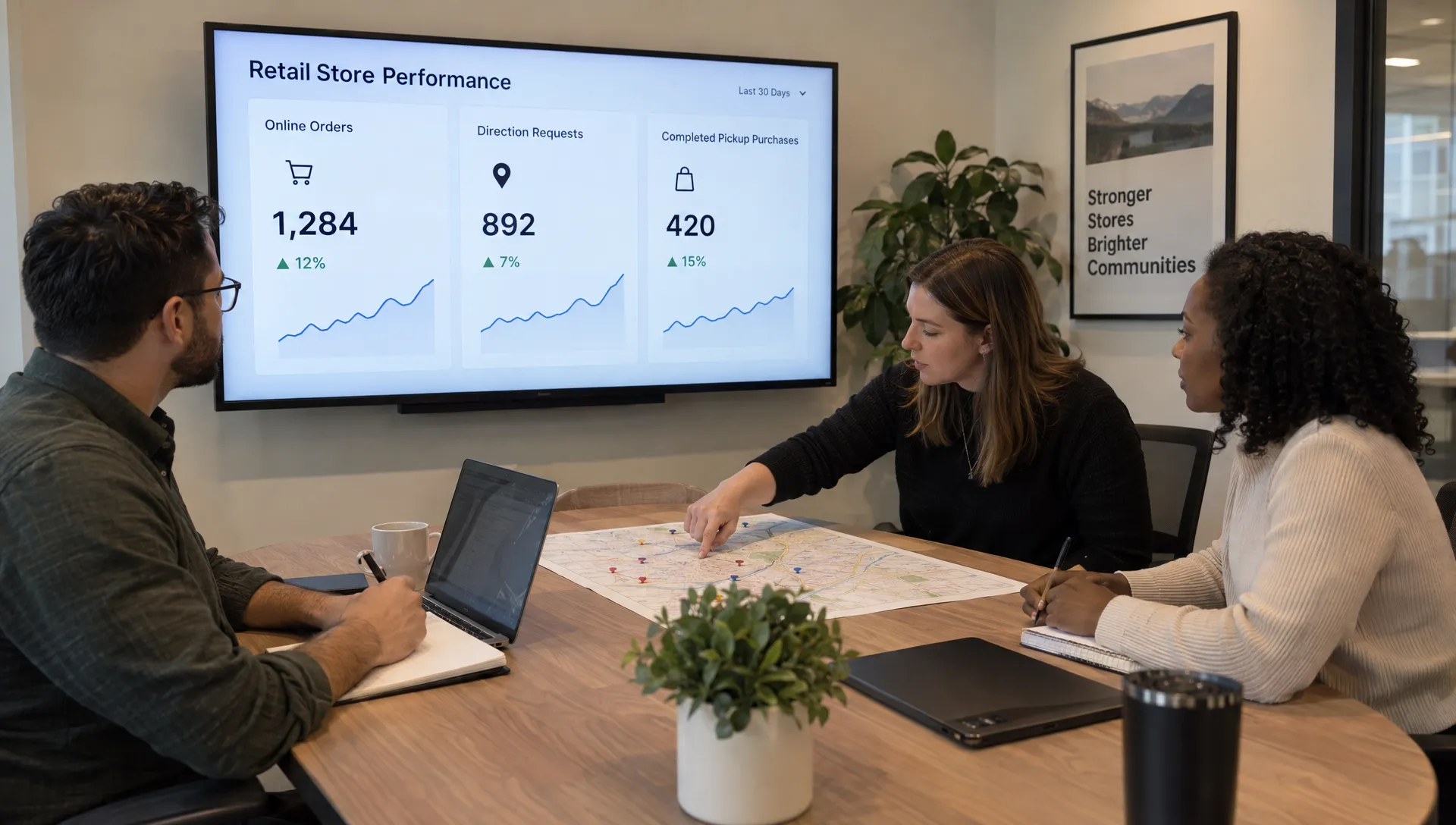
Reporting should distinguish three levels of evidence. Visibility metrics show whether shoppers can discover you. Intent metrics show actions such as viewing store information or requesting directions. Outcome metrics show completed purchases or another verified business result.
Your retail SEO agency should explain the limits of each level. Direction requests are not confirmed visits, phone clicks are not completed calls and store-page sessions are not transactions.
For ecommerce, review organic landing-page performance alongside orders, net revenue and returns where reliable data is available. Segment branded and nonbranded demand so growing brand awareness does not automatically become an SEO success claim.
For stores, track relevant profile interactions, location-page engagement and measurable pickup journeys. Add tagged website links to business profiles where appropriate and document attribution conventions before comparing channels.
Require access to the underlying retailer-owned accounts, not just a presentation. Ask the team to annotate stockouts, promotions, tracking changes and store closures so these factors remain visible during performance reviews.
Agree on baselines before work begins. Seasonal retailers should compare suitable trading periods and account for changes in store count, opening hours and inventory availability. Otherwise, reporting can reward or punish the agency for changes it did not cause.
Make online-to-store attribution explicit
Some shoppers research anonymously, return through another channel and buy in person. No agency can reliably reconstruct every journey. The goal is a defensible measurement approach, not a promise of perfect attribution.
Where lawful and technically feasible, consented customer identifiers, loyalty data or pickup orders can connect some online activity with completed purchases. Any linkage needs privacy review, suitable access controls and clear documentation of what remains unmatched. Do not send prohibited personal information into analytics tools.
Ask the retail SEO agency to distinguish attributed revenue from incremental revenue. Attribution assigns credit under a model. Incrementality asks whether the sale would have occurred without the work.
For sufficiently large store networks, matched-market tests or phased rollouts can help evaluate lift. Comparable locations need similar trading conditions, with promotions, closures and stock availability considered in the design. Smaller retailers may need directional evidence rather than statistically persuasive experiments.
The same distinction matters when evaluating ecommerce advertising for incremental growth. Channel reports should not each claim the entire value of the same purchase.
Keep unmatched transactions visible as a limitation. Excluding them silently can make the measured customer population look more representative than it is.
Put finalists through a practical evaluation
Use a small paid evaluation when the contract value and complexity justify it. Give finalists the same limited dataset and ask for a prioritized response, rather than requesting a complete unpaid strategy.
A useful scenario combines both channels: a category loses organic traffic, several store pages show outdated pickup details and local availability disagrees with the website. Ask the team to explain its diagnostic sequence and separate urgent customer problems from longer-term search improvements.
Have each retail SEO agency identify the evidence it would inspect, its first three actions and the owners required to execute them. Require dependencies, acceptance criteria and a measurement plan.
The strongest response may acknowledge uncertainty or request additional data. That is preferable to confidently prescribing a migration or content expansion without enough evidence.
Invite the proposed delivery lead, not only the sales team. Ask who performs weekly work, which responsibilities are subcontracted and how your account is covered during absences.
Keep permissions narrow during evaluation. Redacted exports or read-only access are usually more appropriate than production publishing rights. You are testing judgment and collaboration, not giving every bidder operational control.
Use a retail SEO agency scorecard with hard gates
Apply the same scoring model to every finalist. The weights below are a starting point, not an industry standard.
| Evaluation area | Suggested weight | Evidence to inspect |
|---|---|---|
| Technical execution | 25% | Production tickets, validation process and delivery references |
| Local and omnichannel capability | 25% | Store workflows, location pages and inventory handling |
| Measurement quality | 20% | Metric definitions, access and attribution limitations |
| Commercial fit | 20% | Complete scope, staffing and total cost |
| Ownership and governance | 10% | Account control, handover terms and security practices |
Score each area consistently, then record why you awarded the score. Separate demonstrated capability from promises that still need verification.
Use hard gates alongside the weighted total. Refusal to provide account access, unclear ownership or guaranteed rankings should not be offset by a polished presentation.
Ask references about missed deadlines, disputed priorities and handover quality. Those conversations often reveal more about the working relationship than another success story.
Put ownership and exit terms in the contract
Your agreement should make delivery and accountability clear before access is granted. Ask legal and procurement teams to review these points:
- Account control: Your business retains appropriate owner or administrator access to analytics, search tools and business profiles.
- Deliverable rights: The contract defines ownership or continuing usage rights for content, code, research and reporting assets, including third-party restrictions.
- Delivery responsibilities: Named parties own implementation, approvals, quality assurance and urgent store-information updates.
- Commercial changes: Renewal, cancellation, notice periods, overages and change-order approvals are explicit.
- Data handling: Access permissions, subcontractors, confidentiality and applicable data-processing obligations are documented.
- Handover: The agreement specifies exports, documentation, outstanding work and access removal when the relationship ends.
A retail SEO agency should also explain its link-acquisition methods and disclose paid placements or other material relationships. Reject work that depends on deceptive content, fabricated reviews or undisclosed tactics that create avoidable policy risk.
Confirm who can authorize changes with customer-facing consequences. A bulk profile edit or URL change should not bypass your release controls simply because it is labeled SEO.
Use individual accounts and appropriate permission levels rather than shared passwords. Ownership on paper is insufficient if the agency remains the only party able to administer essential systems.
Agree on the first 90 days before signing
Treat the first quarter as an implementation and measurement period, not a guaranteed revenue deadline.
During the first 30 days, expect access validation, baseline reporting, a store-data review and a prioritized backlog. Urgent inaccuracies should not wait for a lengthy strategy presentation.
During days 31 through 60, expect agreed fixes to reach production. Depending on the diagnosis, that could mean resolving indexing problems, improving priority store pages or establishing reliable opening-hours updates. Require evidence that deployed changes work as intended.
During days 61 through 90, review execution quality and early signals. Check whether approved pages are discoverable, customer information is more accurate and reporting definitions remain consistent.
The retail SEO agency should explain what can be evaluated within that window and what needs longer observation. Revenue effects can lag implementation, particularly when releases are slow or demand is seasonal.
Set a decision meeting before automatic renewal. Review completed work, unresolved dependencies and the next quarter's priorities. Continue because the partnership is producing credible progress, not because the dashboard contains more activity.
Frequently asked questions
How much should a retailer budget for SEO? Request a scoped quote rather than relying on a universal rate. Compare the full cost of strategy, implementation, location management, content and measurement. Require assumptions about store count, catalog complexity and internal responsibilities.
How long should a retail SEO agency take to deliver results? Distinguish delivery from commercial impact. Access setup and priority fixes should have agreed deadlines. Changes in visibility and sales need observation after implementation, with timing influenced by competition, seasonality and the starting condition of the site.
Is SEO being phased out by AI search? No. Discovery formats are changing, but accessible pages, accurate product information and trustworthy business details remain relevant. Avoid replacing established technical and local-search work with unsupported promises about AI citations.
What does the 80/20 rule mean in retail SEO? It is a prioritization heuristic, not a verified distribution for your business. Identify the categories, locations and technical fixes with the strongest likely impact, then test that assumption against data. Do not assume exactly 20% of pages generate 80% of results.
Choose a partner that can connect the work
The right agency can explain what needs changing, who will implement it and how progress will be measured across ecommerce and stores.
If those priorities depend on engineering, performance or shopping experience improvements, discuss your retail transformation priorities with Space Dinosaurs. Its retail-focused work combines AI-enabled engineering, UX design, analytics and ongoing optimization. Ask how those capabilities would support your search strategy and coordinate with the teams responsible for local discovery.